
You tightened that loose gas cap, replaced a faulty oxygen sensor, or secured your Ford’s capless Easy Fuel neck, but the check engine light refuses to turn off. Now you’re stuck wondering if you need an expensive scan tool or a trip to the dealership just to clear a dashboard warning.
The good news: you can absolutely reset your Ford check engine light without a scanner by disconnecting the negative battery cable for 15 minutes, performing a key-cycle ignition sequence, or pulling the PCM fuse, all free, tool-free manual methods that clear stored Diagnostic Trouble Codes (DTCs) and reset the Powertrain Control Module (PCM) memory at home.
But here’s the catch: if you haven’t fixed the underlying problem, that light will illuminate again after the drive cycle runs its checks. This guide walks you through safe, reliable manual reset procedures for F-150, Focus, Fusion, Escape, Explorer, Ranger, Mustang, Edge, and Transit models, plus what to expect during PCM relearn and why clearing codes without addressing root faults is only a temporary fix.
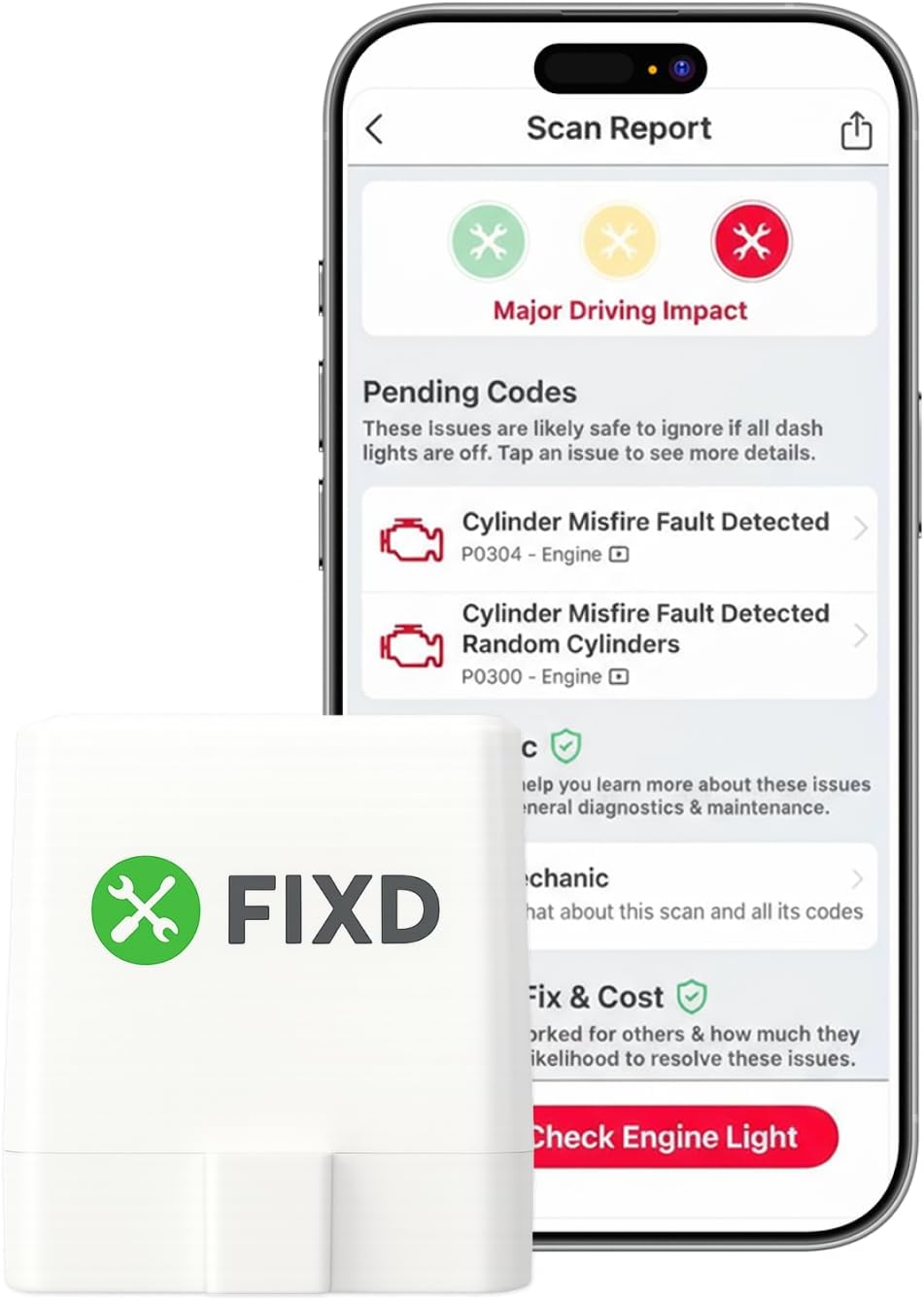
Best Bluetooth OBD2 Scanner
Detect 39,000+ Issues With Enhanced Codes. Save $1000s on car repairs & buying used vehicles by diagnosing problems yourself.
Shop on Amazon
Key Takeaways
- Ford check engine light reset without scanner is possible using three free methods: disconnecting the negative battery cable for 15 minutes, performing a key-cycle ignition sequence, or pulling the PCM fuse to clear stored Diagnostic Trouble Codes.
- The underlying problem must be fixed before resetting—if the root cause persists, the check engine light will reilluminate within one to three drive cycles after manual reset.
- Disconnecting the battery is the most reliable reset method but erases radio presets and triggers a PCM relearn cycle lasting 10-30 miles; ignition cycling works best for soft codes, while fuse removal preserves clock settings.
- Permanent emissions codes cannot be manually cleared and only disappear after the PCM verifies the repair through multiple successful drive cycles—common faults include catalytic converter efficiency (P0420/P0430) and EVAP system leaks (P0455).
- If the check engine light persists after manual reset, verify your repair by inspecting replaced parts, checking connector pins for corrosion, and confirming vacuum lines are properly seated before seeking professional diagnostics.
Common Triggers and Diagnostic Codes
Understanding Why the Light Activates
Your Ford’s check engine light, officially called the Malfunction Indicator Lamp (MIL), illuminates when the PCM detects a sensor reading or system behavior outside normal parameters. The PCM logs a five-character Diagnostic Trouble Code (DTC) into memory and turns on the dashboard light to alert you. Common triggers include oxygen sensor voltage drift, evaporative emission system leaks (often a loose or damaged capless fuel filler seal), catalytic converter efficiency below threshold, mass airflow sensor contamination, or throttle position sensor miscommunication.
The light doesn’t specify which fault occurred, which is why professional mechanics rely on OBD2 scanners to pull the exact code. But, if you’ve already diagnosed and repaired the issue, you simply need to clear the stored code and reset the light, no scanner required.
Frequent Causes and Warning Signs
In real-world Ford ownership, the top culprits are capless Easy Fuel neck seal failures (especially on 2015+ F-150, Escape, and Fusion models), aging downstream oxygen sensors (common after 80,000 miles), vacuum hose cracks causing small evaporative leaks, and mass airflow sensor contamination from dirty air filters. You might notice rough idling, hesitation during acceleration, reduced fuel economy, or a fuel smell near the filler neck before the light appears.
“Fixed my capless filler neck seal on my 2017 F-150, but the CEL stayed on for three days until I disconnected the battery. Came right off and never returned.” via r/f150
If you’ve just replaced a component or tightened a connection, waiting for the light to self-clear can take dozens of drive cycles, manual reset speeds up the process.
Role of Diagnostic Trouble Codes
DTCs exist in two flavors: pending (soft) codes that may self-clear after three consecutive fault-free drive cycles, and confirmed (hard) codes that require manual intervention. When you disconnect the battery or pull the PCM fuse, you erase both types from volatile memory, giving the PCM a clean slate. According to Ford’s powertrain diagnostics documentation, the system will re-flag any active fault within one to three drive cycles if the root cause persists.
Permanent codes, introduced after 2010 model years to meet EPA emissions standards, cannot be manually cleared: they only disappear after the PCM verifies the fault is truly resolved through multiple drive cycles. That’s why understanding what triggered your light is critical before attempting a reset.
Manual Methods for Resetting the Light
Battery Disconnect Approach
Disconnecting the negative battery terminal is the most reliable manual reset method. Here’s the safe procedure:
- Park on level ground, shift to Park, turn off the ignition, and remove the key.
- Pop the hood and locate the 12V battery (driver-side engine bay on most Fords).
- Use a 10mm wrench or socket to loosen the negative (black) terminal clamp nut. Lift the clamp completely off the post.
- Wait 15 minutes minimum, this allows the PCM capacitors to fully discharge and clears volatile memory.
- Optional: Press the brake pedal for 30 seconds or turn on the headlight switch (ignition off) to drain residual power faster.
- Reconnect the negative terminal, tighten the nut snugly, and start the engine.
Safety note: Disconnecting the battery erases radio presets, clock settings, and may trigger a theft-deterrent system lock on some models. You’ll need your radio unlock code (check your owner’s manual or Ford’s online lookup tool). The PCM and Battery Management System (BMS) will relearn idle speed, fuel trim, and shift points over the next 10–30 miles: expect slightly rough idling or hesitation during the first few drives.
Ignition Cycle Reset Process
Some Ford models respond to a key-cycle sequence that can clear pending codes without battery removal:
- Insert the key and turn to the ON/RUN position (dashboard lights on, engine off).
- Wait 30 seconds, then turn the key to OFF.
- Repeat this ON-30sec-OFF cycle three times.
- On the fourth cycle, start the engine and let it idle for one minute.
This method works best for soft codes triggered by temporary glitches (low voltage events, brief sensor disconnections during repair). It won’t clear hard codes or permanent DTCs.
Fuse Removal Technique
Pulling the PCM fuse achieves the same memory wipe as battery disconnect but leaves radio and clock settings intact:
- Locate your fuse panel, usually under the driver-side dash or in the engine bay (consult your owner’s manual for exact location).
- Find the PCM/ECU fuse (often labeled “PCM,” “ECU,” or “EEC”).
- Pull the fuse with needle-nose pliers or a fuse puller, wait five minutes, then reinsert it.
- Start the engine and verify the check engine light is off.
This method is faster than battery disconnect but may not fully reset BMS on newer models with complex electrical architectures.
“Pulled the PCM fuse on my 2018 Escape after replacing the purge valve. Light cleared immediately and hasn’t returned in 500 miles.” via Ford Escape Forum
Drive Cycle and Automatic Reset Strategies
How a Drive Cycle Reset Works
After any manual reset, your Ford’s PCM must complete a drive cycle, a specific sequence of operating conditions that allows the onboard diagnostics (OBD) system to test every monitored component. A typical Ford drive cycle includes cold start, idle for two minutes, gradual acceleration to 40–60 mph, steady cruise for five minutes, deceleration, and another idle period. The PCM runs up to eleven emissions-related monitors (catalyst, oxygen sensor, EVAP, EGR, etc.) during this cycle.
If all monitors pass without detecting the previous fault, the check engine light stays off. If the original problem persists, say, a cracked vacuum hose or failing sensor you didn’t actually replace, the PCM will re-log the DTC and reilluminate the MIL within one to three drive cycles. According to 2026 EPA compliance data, permanent codes must self-clear after three consecutive fault-free drive cycles, but only if the underlying issue is genuinely resolved.
Allowing the System to Self-Clear
If you prefer not to disconnect the battery, you can wait for the light to self-clear naturally. After repairing the fault, drive your Ford through 40–80 miles of mixed city and highway driving over three days. The PCM will eventually clear pending codes and extinguish the light, but this passive approach can take a week or more depending on your driving patterns.
This method is safest for drivers worried about radio lock-outs or PCM relearn issues, but it requires patience and confirmation that you’ve truly fixed the root cause.
Limitations With Permanent Codes
Permanent DTCs, stored to prevent emissions test fraud, cannot be erased by battery disconnect or ignition cycling. These codes only disappear when the PCM verifies the repair through multiple successful drive cycles. You’ll see the check engine light return immediately after a manual reset if a permanent code is present. The only solutions are:
- Complete the repair properly and drive through three full cycles.
- Use a professional-grade scan tool to verify the permanent code has cleared.
- Visit a mechanic for diagnostics if the light persists even though confirmed repairs.
Permanent codes are most common with catalytic converter efficiency faults (P0420/P0430) and EVAP system large leaks (P0455).
Troubleshooting Persistent Issues and Advanced Tips
Handling Stubborn and Permanent Codes
If your check engine light returns within a few drive cycles after manual reset, you’re dealing with either an incomplete repair or a permanent code. First, verify your fix: inspect replaced parts for proper installation, check connector pins for corrosion, and ensure vacuum lines are fully seated. On capless fuel filler neck issues, confirm the seal is OEM-quality, aftermarket knock-offs often fail to seat correctly.
For permanent codes, there’s no shortcut. Drive your Ford through at least three complete drive cycles (cold start to full warm-up, highway cruise, cool-down) and monitor whether the light stays off longer each time. If it reilluminates within minutes, the fault is still active and requires further diagnosis.
Addressing Common Engine Sensor Problems
Ford oxygen sensors are the leading cause of check engine lights across all models. Downstream O2 sensors (bank 1 sensor 2, bank 2 sensor 2) typically fail first, triggering P0136 or P0156 codes. If you replaced a sensor but the light persists, check:
- Wiring harness integrity, rodent damage or chafing near the exhaust can short sensor circuits.
- Exhaust leaks upstream of the sensor, which skew voltage readings.
- Proper torque, O2 sensors require 30–33 lb-ft: over-tightening damages threads.
Mass airflow sensors respond well to cleaning with MAF sensor cleaner spray before replacement. Throttle body carbon buildup can also trigger P0121 or P2111 codes: a throttle body cleaning kit often resolves these without parts replacement.

When Manual Reset May Fail
Manual reset won’t work if:
- The PCM detects an active fault during key-on self-test (light reilluminates within seconds).
- You’re dealing with a permanent emissions code requiring drive-cycle verification.
- The issue is intermittent, like a loose connector that only faults under vibration.
- Multiple unrelated codes are stored, indicating electrical system issues.
In these cases, a Bluetooth OBD2 adapter paired with a free smartphone app (Torque, FORScan) lets you read codes at home without visiting a shop.

Professional Fixes and Preventive Maintenance
If manual resets and basic repairs fail, consult a certified Ford technician for deeper diagnostics. They’ll use factory-level tools to inspect PCM software version (outdated firmware causes false codes on some models), perform bidirectional component tests, and check for Technical Service Bulletins (TSBs) addressing known issues.
Preventive steps to avoid future check engine lights:
- Replace air filters every 15,000 miles to protect the MAF sensor
- Use Top Tier gasoline to prevent injector deposits
- Inspect capless fuel filler seals annually for cracks
- Address oil leaks promptly, oil-fouled O2 sensors fail prematurely
- Keep battery terminals clean and tight to prevent voltage-triggered codes
According to 2026 automotive data from J.D. Power, oxygen sensor and EVAP system faults account for 62% of all check engine light events in Ford vehicles, with proper maintenance reducing recurrence by 40%.
Expert Note: The PCM doesn't just store codes, it records freeze-frame data (RPM, coolant temp, fuel trim) at the moment of failure. Without a scan tool, you lose this diagnostic context, which is why persistent lights often require professional analysis even though successful manual resets.
Frequently Asked Questions
Can you reset a Ford check engine light without a scanner?
Yes, you can reset a Ford check engine light without a scanner using three tool-free methods: disconnecting the negative battery cable for 15 minutes, performing a key-cycle ignition sequence, or pulling the PCM fuse. These methods clear stored Diagnostic Trouble Codes and reset the Powertrain Control Module memory at home.
What happens if I reset the check engine light without fixing the problem?
If you reset the light without fixing the underlying issue, it will illuminate again within one to three drive cycles once the PCM runs its diagnostic checks. Manual reset only clears stored codes; it doesn’t resolve the root fault. Always diagnose and repair the actual problem first.
How long does it take to reset a Ford check engine light by disconnecting the battery?
Disconnecting the negative battery terminal for 15 minutes allows the PCM capacitors to fully discharge and clear volatile memory. You can press the brake pedal or turn on headlights to drain residual power faster, but 15 minutes is the minimum recommended wait time.
What are the most common reasons for a Ford check engine light?
The top triggers are capless fuel filler seal failures, aging oxygen sensors (especially after 80,000 miles), vacuum hose cracks causing EVAP leaks, and mass airflow sensor contamination. Oxygen sensor and EVAP system faults account for 62% of all check engine light events in Ford vehicles.
Will pulling the PCM fuse clear a permanent diagnostic code?
No, permanent Diagnostic Trouble Codes cannot be erased by pulling the PCM fuse or disconnecting the battery. These codes, stored to prevent emissions fraud, only disappear when the PCM verifies the repair through three consecutive fault-free drive cycles.
What should I do if the check engine light returns after manual reset?
If the light returns within a few drive cycles, verify your repair is complete: check connector integrity, ensure vacuum lines are seated, and confirm replaced parts are OEM-quality. If it persists, you may have a permanent code or incomplete repair requiring professional diagnostics.
Read More:
- Ford Check Engine Light (Means and Step-By-Step Diagnosis)
- Ford Escape Check Engine Light (Quick Diagnostic Guide for DIY Owners)
- Ford Fiesta Check Engine Light (Here’s the Critical Reasons Behind It)
- Ford Explorer Check Engine Light (Here’s the Quick Fix Guide)
- Ford Ranger Check Engine Light (Means, Causes and Quick Fix Guide)