
You’re cruising down the highway when your Jeep’s check engine light suddenly starts flashing rapidly. Your heart races. The engine hesitates, shudders slightly, and then, just as mysteriously, the flashing stops. The light either goes solid or disappears completely, leaving you wondering if you imagined the whole thing or if your engine is about to grenade.
When your Jeep check engine light flashes then stops, it means your engine experienced a severe misfire that temporarily dumped unburned fuel into the exhaust system, triggering the rapid flash warning. Even though the flashing stopped, your ECM stored active or pending diagnostic trouble codes (commonly P0300 random misfire or P0301-P0308 cylinder-specific codes) that indicate ignition coil failure, worn spark plugs, fuel injector glitches, or Pentastar-specific rocker arm wear. The intermittent nature doesn’t mean the problem fixed itself, it means the fault is lurking, ready to return, and continuing to drive risks melting your catalytic converter or causing permanent engine damage.
This guide breaks down exactly what happened under your Jeep’s hood, how to read those hidden codes with an OBD2 scanner, and the steps you need to take before that flashing light becomes a four-figure repair bill.
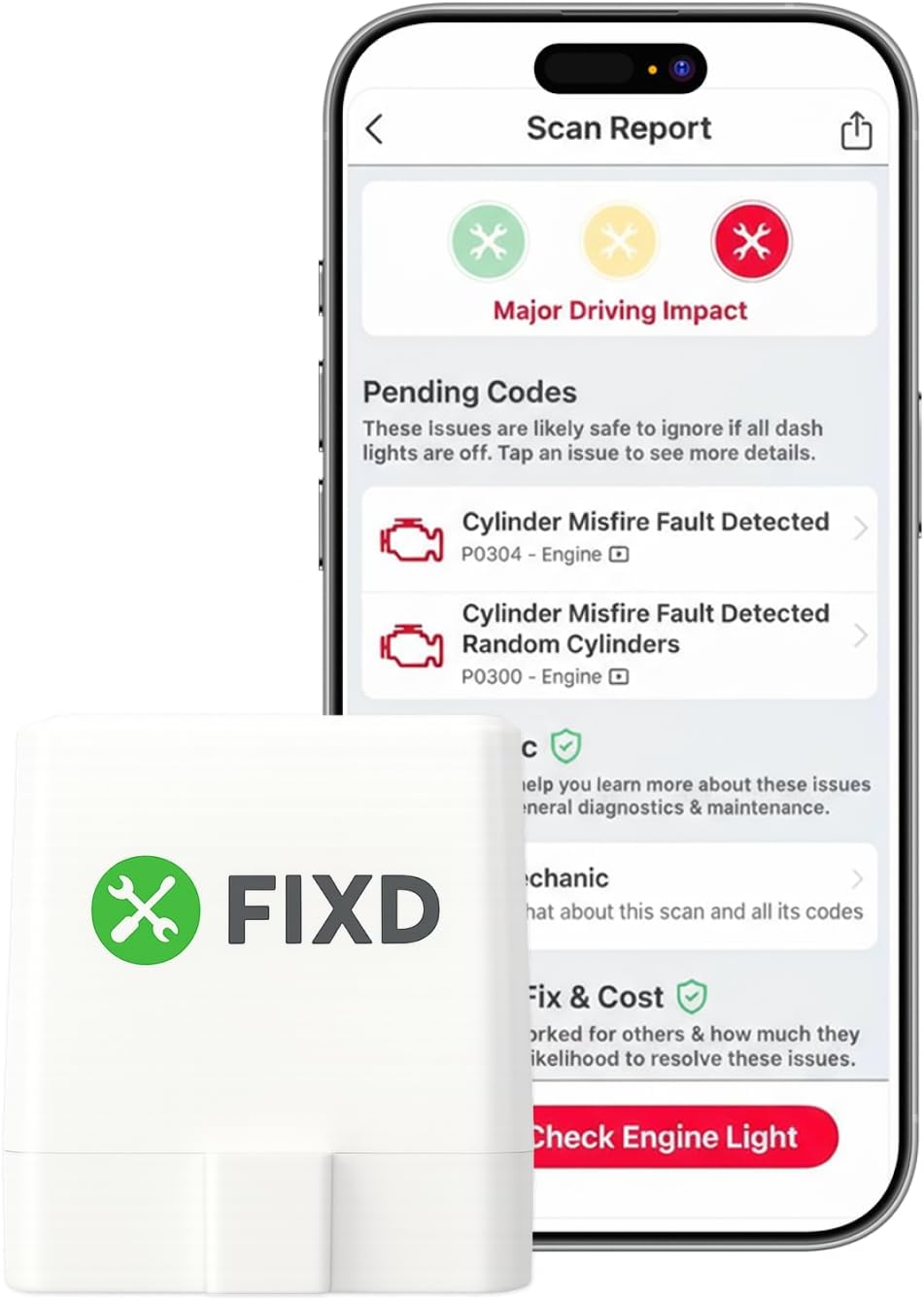
Best Bluetooth OBD2 Scanner
Detect 39,000+ Issues With Enhanced Codes. Save $1000s on car repairs & buying used vehicles by diagnosing problems yourself.
Shop on Amazon
Key Takeaways
- A Jeep check engine light flashing then stopping indicates a severe intermittent misfire where the ECM has stored diagnostic codes—even though the light stopped, the fault remains and can melt your catalytic converter or cause engine damage if ignored.
- Use an OBD2 scanner to pull stored and pending trouble codes immediately after the flashing episode; a single cylinder code (P0301–P0308) points to that cylinder’s coil, plug, or injector, while P0300 indicates a systemic fuel or vacuum issue affecting multiple cylinders.
- Common causes include failing ignition coils that break down when hot, worn spark plugs with widened gaps, fuel injector clogs, vacuum leaks, and on Pentastar V6 engines, documented rocker arm and lifter wear that triggers intermittent valve train failures.
- Continuing to drive with active misfires risks destroying your catalytic converter in 5–10 minutes, diluting engine oil by raw fuel and accelerating bearing wear, and causing potential catalytic converter replacement costs of $1,800–$3,500 or engine rebuild costs of $4,000–$7,000.
- Prevent future check engine light episodes by scanning for pending codes at every oil change, replacing spark plugs per manufacturer intervals, maintaining oil changes every 5,000–7,500 miles to protect Pentastar lifters, and addressing rough idle or hesitation symptoms before they escalate.
What a Flashing Check Engine Light Means
Differences Between Solid and Flashing Check Engine Lights
A solid check engine light signals a stored fault that needs attention but doesn’t pose an immediate threat, think loose gas cap, faulty oxygen sensor, or EVAP system leak. You can typically drive to a shop without drama. A flashing check engine light, but, screams emergency. Federal regulations mandate that rapid flashing warns of an active, severe misfire dumping raw fuel into the exhaust, where it can ignite and destroy your catalytic converter within minutes.
Your Jeep’s ECM monitors combustion events hundreds of times per second. When one or more cylinders fail to fire properly, unburned gasoline flows past the piston, through the exhaust valves, and into the catalytic converter. That converter operates at 1,200–1,600°F under normal conditions. Flooding it with liquid fuel can spike temps beyond 2,000°F, melting the ceramic honeycomb substrate and causing a $1,500–$3,000 repair.
Immediate Risks of a Flashing Check Engine Light
The moment your check engine light starts blinking, three critical threats emerge. First, catalytic converter damage begins almost instantly, unburned fuel entering the exhaust can overheat and fracture the catalyst material. Second, severe misfires wash cylinder walls with raw gasoline, diluting your engine oil and accelerating wear on piston rings and bearings. Third, you risk stalling in traffic or losing power on the highway, creating a safety hazard.
Jeep Wranglers and Grand Cherokees equipped with the 3.6L Pentastar V6 are particularly vulnerable because of known rocker arm and lifter wear patterns that can trigger intermittent valve train issues. When a lifter sticks or a rocker arm pivot fails, that cylinder temporarily stops firing, the ECM detects the misfire, and the light flashes. Once the lifter frees up or oil pressure stabilizes, combustion resumes and the flashing stops, but the damage clock has already started.
“2014 Grand Cherokee. CEL started flashing on the interstate, felt like the Jeep was bucking. Pulled over, restarted, light went solid. Codes showed P0302 cylinder 2 misfire. Turned out to be a cracked ignition coil.” via r/Jeep
When the Light Flashes and Then Stops
If the flashing check engine light transitions to solid or turns off completely, your Jeep’s ECM detected that the misfire condition stopped but hasn’t cleared the underlying fault. The ECM stores both active and pending diagnostic trouble codes, active codes represent faults currently present, while pending codes flag intermittent issues that haven’t yet triggered two consecutive drive cycles. Even if your dashboard looks normal, those codes sit in memory, waiting for a scan tool to reveal them.
Intermittent misfires often occur under specific conditions: hard acceleration (when ignition coil secondary voltage demand peaks), cold starts (when fuel atomization suffers), or sustained highway speeds (when a weak coil or fouled spark plug can’t maintain consistent spark). Once load decreases or engine temperature stabilizes, the misfire may vanish, but the root cause remains. Ignoring it means you’re gambling that the next flashing episode won’t melt your cat or leave you stranded.
Common Causes Behind Intermittent Flashing
Engine Misfire and Cylinder-Specific Trouble Codes
Random multiple cylinder misfire code P0300 indicates the ECM detected misfires across several cylinders without a clear pattern, often pointing to fuel pressure problems, vacuum leaks, or failing ignition components affecting the entire engine. Cylinder-specific codes P0301 through P0308 pinpoint exactly which cylinder misfired, P0304 means cylinder 4, for example, and help you zero in on a bad coil pack, fouled spark plug, or injector issue on that cylinder alone.
Pentastar V6 engines in Jeeps from 2011–2026 have a documented history of left-bank (cylinders 1, 3, 5) rocker arm and lifter failures, especially in high-mileage examples that have stretched oil change intervals. When a roller rocker arm pivot wears or a hydraulic lifter collapses, that valve doesn’t open fully, combustion suffers, and a misfire occurs. Once oil pressure pulses through the lifter or the pivot shifts slightly, normal operation resumes, until the next time.
Ignition System Failures
Ignition coils on modern Jeeps are coil-on-plug (COP) designs that sit directly atop each spark plug. These coils generate 40,000+ volts to jump the plug gap, and they operate in a hostile environment, extreme heat, vibration, and moisture. A failing coil may work fine when cool but break down internally once it heats up, causing intermittent spark loss. When the coil cools during idle or light throttle, spark returns and the flashing stops.
Spark plug condition matters just as much. Jeep recommends replacing plugs every 30,000–100,000 miles depending on plug type (copper, platinum, iridium), but off-road use, short trips, and extended idling accelerate electrode wear. A plug with a widened gap or carbon-fouled electrode demands higher voltage, stressing the coil and creating intermittent misfire conditions. Check your OBD2 scanner regularly to catch these issues early.

Fuel Delivery Issues and Vacuum Leaks
Fuel injectors spray a precise mist of gasoline into each cylinder, and when an injector clogs or its electrical connector corrodes, fuel delivery becomes erratic. You might experience normal combustion most of the time, but under heavy load the injector can’t keep up, the air-fuel mixture leans out, and a misfire occurs. Once load decreases, the injector catches up and the misfire clears.
Vacuum leaks, often from cracked intake manifold gaskets, PCV hoses, or brake booster lines, introduce unmetered air into the combustion chamber, leaning out the mixture and causing random misfires across multiple cylinders. Jeep Wranglers with the 3.6L engine are notorious for intake manifold gasket failures around 80,000–120,000 miles, producing intermittent rough idle, hesitation, and flashing check engine lights that come and go with throttle position.
Emissions System Faults
While less common, a failing upstream oxygen sensor or exhaust gas recirculation (EGR) valve can trick the ECM into delivering the wrong air-fuel ratio, triggering misfires. A lazy O2 sensor that responds sluggishly may cause the ECM to overcorrect fueling, briefly leaning or enriching the mixture enough to cause a cylinder to misfire. Once the sensor reading stabilizes, combustion normalizes and the flashing stops.
EGR valves stuck partially open dilute the intake charge with inert exhaust gases, reducing combustion efficiency and causing intermittent misfires, especially at idle or low speeds. Jeep Compass and Patriot models with the 2.4L World Engine are particularly prone to EGR carbon buildup, creating the exact intermittent flashing check engine light scenario you experienced.
Symptoms and Potential Damage
Rough Idling and Engine Performance Issues
Even after the flashing stops, you’ll likely notice your Jeep idles unevenly, rpm needle bouncing between 600 and 800, subtle vibration through the steering wheel, or a faint shudder at stoplights. Misfires disrupt the engine’s mechanical balance, and even a single cylinder firing late or not at all sends shockwaves through the crankshaft and drivetrain. Under acceleration, you might feel hesitation or a stumble as the ECM tries to compensate for the weak cylinder.
These symptoms often worsen when the engine is cold or during the first few minutes after startup, when fuel atomization is poor and ignition components haven’t reached operating temperature. If you’re experiencing rough running that smooths out once the engine warms up, suspect ignition coils or spark plugs that fail when cold and recover as resistance drops with heat.
Poor Fuel Economy and Increased Emissions
A misfiring cylinder wastes fuel, literally. Instead of burning gasoline to produce power, that fuel exits the exhaust unburned, tanking your fuel economy by 10–25% depending on misfire severity and frequency. You’ll find yourself filling up more often, and your Jeep will fail emissions testing because hydrocarbon (HC) readings will skyrocket as raw fuel floods the exhaust stream.
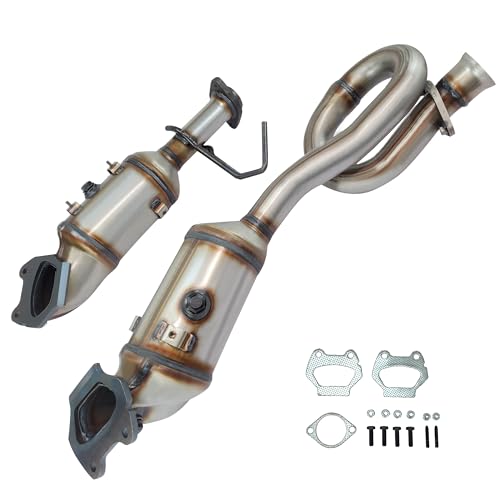
The catalytic converter tries valiantly to burn off this excess fuel, but it’s not designed for that workload. Sustained exposure to unburned fuel overheats the catalyst, reduces its efficiency, and eventually causes the substrate to melt or fracture. Once that happens, you’ll throw a P0420 or P0430 catalyst efficiency code, and you’re looking at a major repair involving a catalytic converter replacement.
Long-Term Risks of Persistent Misfires
Continuing to drive with intermittent misfires accelerates engine wear in ways you won’t see until it’s too late. Raw fuel washing past piston rings dilutes your engine oil, reducing its viscosity and compromising its ability to protect bearings, camshafts, and cylinder walls. Over time, this leads to increased oil consumption, bearing knock, and eventually catastrophic engine failure.
Catalytic converter replacement on a Jeep Grand Cherokee can run $1,800–$3,500 depending on whether you need federal or California emissions specs and whether you opt for OEM or aftermarket parts. Engine rebuilds start at $4,000–$7,000 for a Pentastar V6. These aren’t scare tactics, they’re real-world costs that can be avoided by addressing a flashing check engine light immediately, even if it stopped flashing.
“My 2016 Wrangler CEL flashed three times on the on-ramp, then went away. Ignored it for two weeks. Now I’m replacing the cat and two coils. Don’t be me.” via WranglerForum
Other Warning Signs to Watch For
Pay attention to accompanying symptoms: a strong gasoline smell from the exhaust (unburned fuel), loss of power during acceleration, increased engine noise or ticking (valve train wear), or difficulty starting after the flashing event. Any of these signs suggest the underlying fault is worsening and needs immediate diagnosis.
Diagnosis, Solutions, and Prevention
Using Diagnostic Trouble Codes for Accurate Assessment
Your first move after a flashing-then-stopping check engine light episode is to plug in an OBD2 scanner and pull stored and pending codes. Even if your dash looks normal, those codes tell the complete story. A quality scanner will show code number, freeze frame data (engine rpm, load, coolant temp at the moment of the fault), and pending codes that haven’t yet triggered the light but indicate intermittent faults.
Look for patterns: P0300 plus multiple cylinder-specific codes (P0301, P0304, P0306) suggests a systemic issue like low fuel pressure or vacuum leak. A single cylinder code (P0302 only) points to that cylinder’s coil, plug, or injector. Write down the codes before clearing them, you’ll want to monitor whether they return after a test drive, which confirms the fault is active rather than a one-time glitch.
Essential diagnostic equipment:
- OBD2 scanner with live data capability
- Spark plug socket and gap tool
- Multimeter for testing coil resistance
- Inspection mirror and flashlight for visual checks
When to Pull Over and Call a Mechanic
If your check engine light starts flashing and stays flashing, pull over immediately, turn off the engine, and arrange a tow. Continuing to drive with an active severe misfire will destroy your catalytic converter in as little as 5–10 minutes of operation. If the flashing stopped but you notice rough running, loss of power, strong fuel smell, or the light returns, don’t attempt to drive home, the next misfire episode could leave you stranded or cause a fire from overheated exhaust components.
Call a qualified Jeep technician or dealership if you’re not comfortable diagnosing the issue yourself. Describe exactly what happened: when the light flashed, how long it flashed, what you were doing (accelerating, cruising, idling), and any symptoms you noticed. This information helps the tech pinpoint the likely cause and avoid unnecessary diagnostic time.
Essential Repairs and Maintenance Tips
Once you’ve identified the cause via stored codes, common repairs include replacing ignition coils (typically $50–$150 per coil), spark plugs ($8–$25 each), or fuel injectors ($100–$300 each). If you have a Pentastar V6 showing left-bank misfire codes and you’re over 100,000 miles, discuss rocker arm and lifter inspection with your mechanic, Jeep released updated parts to address the failure-prone original designs.
Comparison: DIY vs. Professional Diagnosis
| Approach | Cost | Time | Skill Required | Best For |
|---|---|---|---|---|
| DIY OBD2 scan + plug/coil swap | $50–$300 | 1–3 hours | Basic mechanical | Simple ignition issues, single cylinder codes |
| Professional diagnosis + repair | $150–$800+ | 2–8 hours | None (tech does it) | Multiple codes, complex symptoms, warranty concerns |
Maintain your Jeep’s ignition and fuel systems proactively: replace spark plugs at manufacturer intervals, use quality fuel with detergent additives, change engine oil every 5,000–7,500 miles to protect Pentastar lifters, and inspect ignition coils annually for cracks or oil contamination.
Preventing Future Check Engine Warnings
Preventive maintenance beats expensive repairs every time. Establish a routine: scan for pending codes every oil change using a basic OBD2 reader, inspect spark plugs every 30,000 miles even if they’re rated for longer, and address minor performance issues (rough idle, hesitation) before they escalate into flashing check engine lights.
Avoid short trips and extended idling, both prevent the engine from reaching full operating temperature, causing carbon buildup on intake valves, spark plugs, and injectors. If you do mostly city driving, take your Jeep on a monthly highway run to let the engine breathe and burn off deposits. For off-road enthusiasts, water crossings can saturate ignition components: consider dielectric grease on coil boots and ensure your air intake is sealed to prevent moisture intrusion.
Expert Note: According to ASE-certified Jeep diagnostics specialist Mike Reynolds, "The intermittent nature of these misfires often misleads owners into thinking the problem fixed itself. In reality, heat cycling, vibration, and oil contamination continue degrading the failing component until it fails completely, usually at the worst possible moment. Catching and addressing pending codes before they become active hard faults is the difference between a $200 repair and a $2,500 disaster."
Frequently Asked Questions
What does it mean when a Jeep check engine light flashes then stops?
A flashing check engine light indicates a severe misfire dumping unburned fuel into the exhaust. When it stops, the ECM still stores diagnostic trouble codes (P0300, P0301-P0308) indicating the fault persists—ignition coils, spark plugs, fuel injectors, or rocker arm wear. The problem hasn’t fixed itself; it’s intermittent and will return.
Is it safe to keep driving if the check engine light stops flashing?
No. Even if flashing stops, continuing to drive risks catalytic converter damage (temps spike to 2,000°F+), oil dilution, and engine wear. Intermittent misfires often worsen under load. Pull over, scan for codes, and address the root cause immediately to avoid $1,500–$3,500 repair bills.
What are the most common causes of a Jeep check engine light flashing intermittently?
Common causes include failing ignition coils (coil-on-plug designs break down under heat), fouled spark plugs (widened gaps demand more voltage), vacuum leaks (cracked intake manifold gaskets), fuel injector clogs, and Pentastar V6 rocker arm/lifter wear (especially after 100,000 miles on left-bank cylinders).
How can I diagnose the cause of an intermittent check engine light on my Jeep?
Use an OBD2 scanner to read stored and pending codes immediately after the flashing episode. Codes like P0300 suggest systemic issues (fuel pressure, vacuum leaks); single cylinder codes (P0302) point to that cylinder’s coil, plug, or injector. Write codes before clearing them to confirm the fault recurs.
Can a Jeep Pentastar V6 engine have intermittent misfire issues from rocker arm wear?
Yes. Pentastar V6 engines (2011–2026) commonly suffer left-bank (cylinders 1, 3, 5) rocker arm and lifter failures, especially at high mileage. A worn pivot or collapsed lifter prevents that cylinder from firing; once oil pressure or load shifts, it fires again—creating the flashing-then-stopping pattern.
What damage can result from ignoring an intermittent check engine light?
Sustained misfires overheat catalytic converters ($1,800–$3,500 replacement), dilute engine oil (bearing damage, engine knock), and reduce fuel economy by 10–25%. Long-term exposure can lead to catastrophic engine failure requiring $4,000–$7,000 rebuilds. Addressing pending codes early prevents these costly repairs.
Read More:
- Jeep Check Engine Light (Here’s the Quick Diagnostic Guide)
- Jeep Grand Cherokee Check Engine Light (Means and Triggers Explained)
- Jeep Compass Check Engine Light (Here’s the Fixes You Can Do)
- Jeep Renegade Check Engine Light (Here’s the Quick Fix Guide)
- Jeep Patriot Check Engine Light (Means, Triggers and Error Codes)