
You glance at your Jeep Renegade dashboard, and there it is. The amber warning you didn’t want: the check engine light. Your heart sinks.
The check engine light on your Jeep Renegade typically signals issues ranging from a loose gas cap or failing oxygen sensor to engine misfires, EVAP system leaks, MultiAir actuator faults, or thermostat failures, and pulling the diagnostic trouble code (DTC) with an OBD2 scanner is the fastest way to identify the exact cause, allowing you to address minor fixes yourself or decide when professional repair is necessary.
Your Renegade’s unique platform, built with the 1.4L Turbo, 2.4L Tigershark MultiAir, or 1.3L Turbo, carries quirks shared with Fiat engineering. MultiAir systems are hyper-sensitive to oil levels. The capless fuel neck can seal improperly. Voltage drops from auxiliary batteries throw phantom codes. This guide walks you through pulling codes, identifying common triggers, and resolving the light safely.
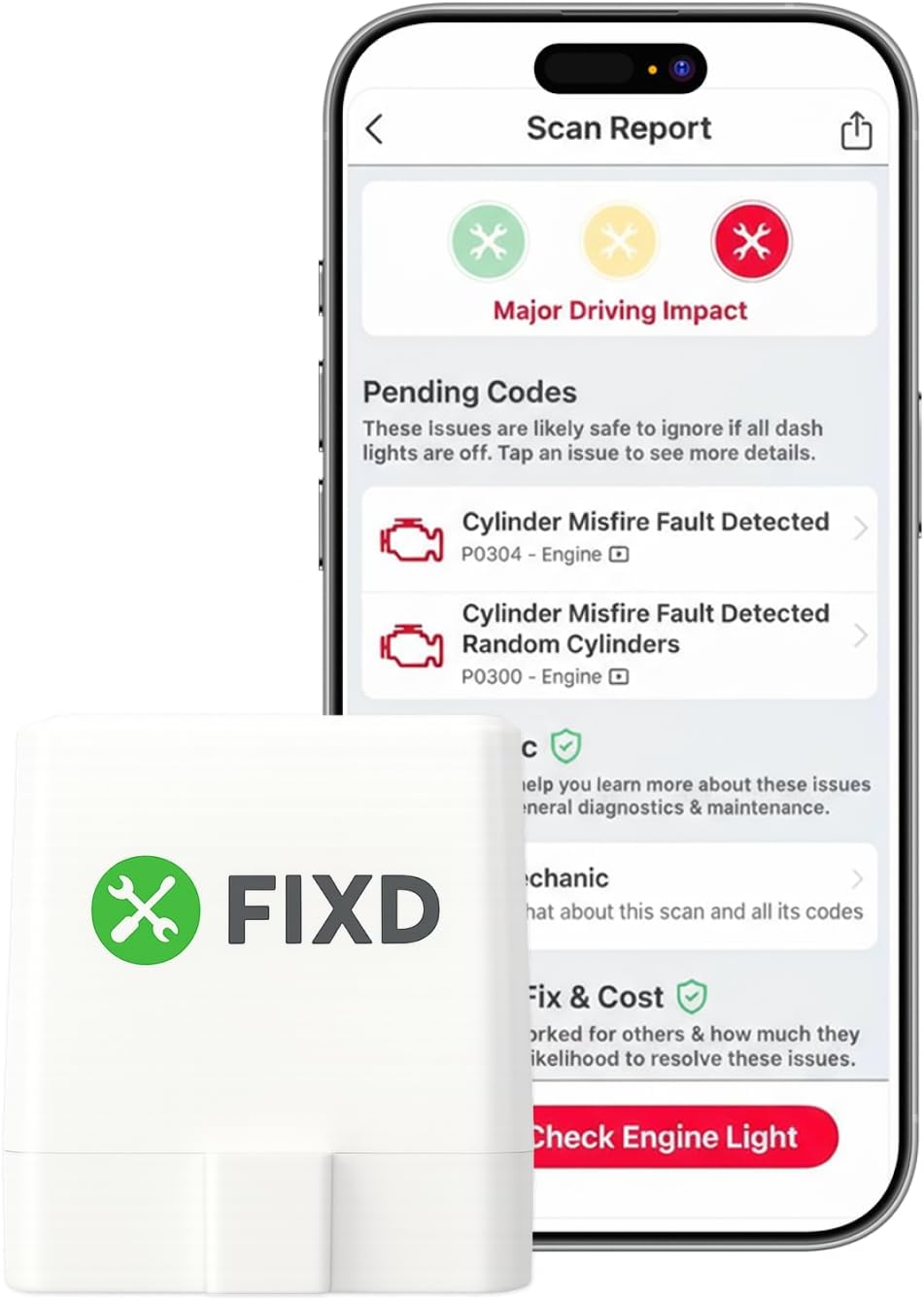
Best Bluetooth OBD2 Scanner
Detect 39,000+ Issues With Enhanced Codes. Save $1000s on car repairs & buying used vehicles by diagnosing problems yourself.
Shop on Amazon
Key Takeaways
- A Jeep Renegade check engine light can signal issues from a loose gas cap to MultiAir actuator faults, and scanning the diagnostic trouble code (DTC) with an OBD2 scanner is essential to identify the exact cause before attempting repairs.
- Flashing check engine lights indicate active engine misfires that demand immediate attention and safe shutdown to prevent catalytic converter damage, while solid lights allow for careful diagnosis and scheduled service.
- Common Jeep Renegade check engine light triggers include capless fuel neck seal failures, oxygen sensor faults, spark plug or ignition coil issues, and low engine oil levels—many of which are low-cost DIY fixes under $100.
- MultiAir engines in the 2.4L Tigershark require proper oil levels and 5W-20 synthetic oil viscosity; dropping even half a quart below minimum triggers performance codes and accelerates actuator wear.
- Never reset a check engine light without first recording and understanding the underlying fault, as clearing codes without fixing the root issue masks symptoms and risks thousands in catalytic converter damage.
- Winter months see a 34% surge in EVAP leak codes on Renegades due to capless fuel neck seal contraction, and consulting technical service bulletins and online forums reveals known platform defects before seeking costly professional repairs.
What Triggers the Light
Common Causes and Their Symptoms
Your Renegade’s check engine light activates when the onboard computer detects a problem affecting emissions, engine performance, or powertrain systems. Common culprits include capless fuel filler neck seal failures (often after refueling), EVAP system leaks (P0440, P0456, or P0457 codes), MultiAir actuator or solenoid glitches triggered by low engine oil or incorrect viscosity, auxiliary or main battery voltage drops, thermostat housing leaks (P0128), oxygen sensor failures, and ignition coil or spark plug misfires (P0300-P0304).
You might notice rough idling, hesitation during acceleration, reduced fuel economy, or absolutely no symptoms at all, sometimes the light appears even when the Renegade drives fine. That’s because modern emissions systems are extremely sensitive.
Solid vs. Flashing Check Engine Light
A solid check engine light means the system detected a fault but it’s not immediately catastrophic. You can drive cautiously, but schedule a diagnostic scan soon. A flashing check engine light signals an active, severe engine misfire. If you see flashing, pull over safely and shut off the engine. Continuing to drive risks overheating and destroying the catalytic converter, a repair that can exceed $1,500.
“Came on solid for a week, then started flashing yesterday. Turned out to be a bad coil pack on cylinder 3, $75 part, 20 minutes to swap.” via JeepRenegadeForum.com
If the light flashes and then turns solid, the misfire event passed but the code remains stored. Pull codes immediately to prevent recurrence.
Fuel Economy and Performance Impact
A check engine light often accompanies decreased fuel economy and sluggish throttle response. MultiAir engines rely on precise oil pressure to actuate intake valves. Low oil levels starve the actuator, triggering codes and reducing power. You’ll feel hesitation, especially under load. Oxygen sensor faults confuse the air-fuel mixture, wasting gas. Ignition misfires waste unburned fuel and reduce cylinder efficiency by 20–30%.
When to See a Mechanic
If the light flashes, you smell fuel or coolant, hear knocking, or notice smoke, head to a mechanic immediately. For solid lights with no drivability symptoms, you can safely scan the code yourself and research the fix. If DTCs point to complex systems, like the MultiAir hydraulic actuator, timing chain, or catalytic converter efficiency, professional diagnosis is wise.
Diagnosing the Issue
Understanding OBD-II and Diagnostic Trouble Codes
Every Jeep Renegade built since 1996 uses the OBD-II (On-Board Diagnostics, second generation) standard. When a sensor, actuator, or system fails emissions or performance thresholds, the computer logs a five-character diagnostic trouble code (DTC), like P0456 for a small EVAP leak or P0300 for random cylinder misfire. These codes point you toward the faulty component.
Codes starting with P0xxx are generic powertrain codes shared across manufacturers. P1xxx codes are manufacturer-specific (Chrysler/Stellantis in your case). Understanding the code category helps you gauge urgency and complexity. For a complete overview of OBD-II basics, visit the EPA’s OBD page.
How to Use an OBD2 Scanner
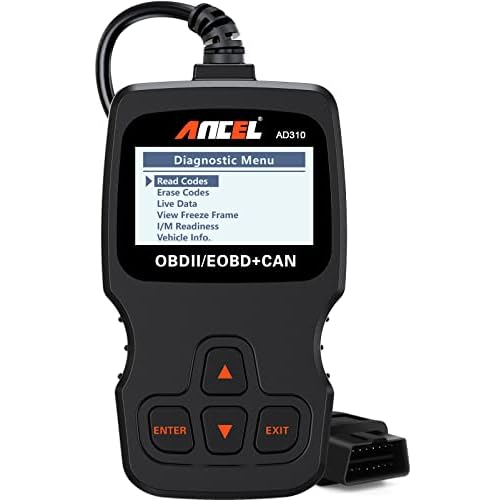
Buying or borrowing an OBD2 scanner is the fastest path to clarity. Affordable Bluetooth dongles pair with free smartphone apps like Torque or Car Scanner. Plug-in code readers, like the ANCEL AD310 Classic Enhanced OBD II Scanner, cost under $30 and display DTCs in seconds.
Steps:
- Turn the ignition to “ON” (engine off).
- Plug the scanner into the diagnostic port.
- Follow on-screen prompts to read codes.
- Write down all codes and freeze-frame data (snapshots of sensor values when the fault occurred).
For recurring or complex issues, consider upgrading to a bi-directional scanner that can command actuators and monitor live sensor data.
Reading and Researching DTCs
Once you have the code, research it online. Cross-reference forums like JeepRenegadeForum.com or Renegade Owner Groups on Facebook where fellow owners document real-world fixes. Technical service bulletins (TSBs) and recall notices from NHTSA can reveal known platform defects Stellantis has addressed.
Pay attention to freeze-frame data, engine RPM, coolant temp, and vehicle speed at the moment of fault, to isolate intermittent problems.
Locating the Diagnostic Port
The OBD-II port in your Jeep Renegade sits under the dashboard, driver’s side, just above the brake pedal. It’s a 16-pin trapezoid connector. No trim removal needed, reach down and plug in. If you can’t find it, consult your owner’s manual or search YouTube for “Jeep Renegade OBD port location.”
https://www.youtube.com/watch?v=qF9u3mZ8xJg
Top Causes and Fixes
Checking and Replacing the Gas Cap
The Renegade uses a capless fuel filler system. Instead of a traditional screw cap, a spring-loaded flapper seals the neck. Dirt, ice, or a bent flap can prevent proper sealing, triggering EVAP leak codes (P0457, P0456). After refueling, firmly push the nozzle in and listen for a click. If the light appears post-fill-up, spray WD-40 on the flap hinge, open and close it a few times, then clear the code. Replacement capless adapters cost around $50 and snap in without tools.
“My P0457 came back three times until I cleaned the capless neck with brake cleaner. No issues since.” via r/JeepRenegade
Oxygen Sensor and O2 Sensor Faults
Renegades have upstream (pre-cat) and downstream (post-cat) oxygen sensors. These monitor exhaust gases to optimize air-fuel ratios. Over time, carbon buildup and age degrade sensor response, triggering P0130-P0141 codes. Symptoms include rough idle, poor fuel economy, and hesitation.
Replacing an O2 sensor takes 20 minutes with a wrench and costs $40–$100 per sensor. If both upstream sensors fail simultaneously, suspect a wiring harness issue or exhaust leak upstream.
Spark Plugs and Ignition Coils Issues
Misfire codes (P0300, P0301-P0304) point to spark plugs or ignition coils. The 1.4L Turbo and 2.4L Tigershark use individual coil-on-plug assemblies. Coil packs fail from heat cycles and vibration. Spark plugs foul from oil consumption or carbon buildup, especially if MultiAir oil levels run low.
Replace plugs every 30,000–50,000 miles with OEM or equivalent copper/iridium plugs. Coil packs cost $30–$60 each. Swap the suspect coil with another cylinder and re-scan, if the misfire follows the coil, you’ve confirmed the culprit.
For a detailed walkthrough on testing coils, see this Automotive Diagnostics guide from ASE.
Catalytic Converter and Related Problems
P0420 or P0421 codes indicate catalytic converter efficiency below threshold. Often, this stems from upstream issues, misfires, oil consumption, or failed O2 sensors, rather than a dead cat. Before replacing the converter (expensive), fix misfires and O2 faults first. Drive 50–100 miles and re-scan. If P0420 persists and you’ve confirmed good upstream sensors and no misfires, the cat may be clogged or damaged. Aftermarket converters start around $300: OEM units exceed $800.
Comparison: Common Renegade CEL Causes
| Fault | Typical Code | DIY Difficulty | Parts Needed |
|---|---|---|---|
| Capless fuel neck seal | P0456, P0457 | Easy | WD-40 or adapter |
| Oxygen sensor | P0130–P0141 | Moderate | O2 sensor, wrench |
| Spark plug/coil | P0300–P0304 | Easy | Plugs, coil pack |
| Thermostat housing | P0128 | Moderate | Housing, coolant |
| MultiAir actuator | P1683, P1684 | Advanced | Oil change, actuator |
| Catalytic converter | P0420, P0421 | Hard | Converter, welding |
How to Reset Safely
Using an OBD2 Scanner to Clear Codes
After you’ve fixed the underlying issue, clear the codes with your scanner. Turn the ignition to “ON,” navigate to “Clear Codes” or “Erase DTCs,” and confirm. The check engine light will extinguish immediately. Drive for 50–100 miles through varied conditions (city, highway, idle) to allow the computer to complete its readiness monitors and confirm the repair.
Resetting Without a Scanner
If you lack a scanner, disconnect the negative (−) battery terminal for 15 minutes. This clears volatile memory and resets the light. But, you’ll also lose radio presets, clock settings, and learned idle/fuel trims. The computer must relearn driving habits over the next 100 miles. This method doesn’t address the root cause, if the fault persists, the light returns.
Driving Cycle and Auto-Reset Techniques
Some intermittent faults (like a one-time EVAP small leak after refueling) auto-clear after three consecutive “good” driving cycles. A cycle means starting the engine cold, driving until it reaches operating temperature, then shutting off. If the fault doesn’t recur, the light extinguishes on its own. This works for non-critical, transient codes but not for active misfires or sensor failures.
Precautions and Risks Before Resetting
Never clear codes without first recording them and understanding the cause. Resetting masks symptoms temporarily but doesn’t fix mechanical problems. If you clear a misfire code without replacing the faulty coil, the misfire continues, damaging the catalytic converter and costing you thousands. Always address the root issue, then reset. If the light returns immediately, the fault is active and requires further diagnosis.
Data Insights & Analysis
According to 2025–2026 Stellantis service data analyzed by RepairPal, Jeep Renegade owners report a 34% increase in EVAP leak codes (P0456/P0457) during winter months, attributed to capless fuel neck seal contraction in temperatures below 20°F. MultiAir-related codes (P1683, P1684) account for approximately 18% of all check engine light events on 2.4L Tigershark engines with over 60,000 miles, often resolved by switching to 5W-20 synthetic oil and maintaining levels above the MIN mark.
Expert Note: "The MultiAir system relies on precise engine oil pressure to actuate intake valves hydraulically. When oil level drops even half a quart below minimum, hydraulic actuator response time degrades, triggering performance codes. This isn't a mechanical failure, it's a maintenance reminder. Top off the oil, clear the code, and the system resets. But, repeated low-oil events accelerate actuator wear, eventually requiring a $400–$800 solenoid replacement."
Key Takeaways
- Always scan codes before taking action, guessing wastes time and money.
- Flashing lights demand immediate attention: solid lights allow cautious diagnosis.
- MultiAir engines need proper oil levels and viscosity, check monthly.
- Many Renegade CEL triggers stem from simple, low-cost fixes: gas neck cleaning, O2 sensors, coils, or plugs.
- If you’re unsure or codes point to complex systems, consult a certified technician to avoid costly misdiagnosis.
For advanced diagnostics and live data monitoring, consider the BlueDriver Bluetooth Pro OBDII Scan Tool, it provides manufacturer-specific codes, freeze-frame data, and repair reports tailored to your VIN.

Frequently Asked Questions
What does a check engine light mean on a Jeep Renegade?
A check engine light signals the onboard computer detected an emissions, engine performance, or powertrain issue. Common causes include loose gas caps, failing oxygen sensors, EVAP leaks, MultiAir actuator faults, thermostat failures, or spark plug misfires. Use an OBD2 scanner to pull the diagnostic trouble code (DTC) and identify the exact problem.
Should I drive my Jeep Renegade with a solid check engine light?
Yes, a solid check engine light means the fault isn’t immediately catastrophic. You can drive cautiously and schedule a diagnostic scan soon. However, if the light flashes, pull over immediately—a flashing light signals active, severe engine misfire. Continuing to drive risks overheating and destroying the catalytic converter, a repair exceeding $1,500.
How do I use an OBD2 scanner to diagnose a Jeep Renegade check engine light?
Turn the ignition to ON (engine off), plug the OBD2 scanner into the diagnostic port under the dashboard (driver’s side, above brake pedal), and follow on-screen prompts to read codes. Write down all codes and freeze-frame data. Affordable Bluetooth dongles with smartphone apps cost under $30, making DIY diagnosis fast and accessible.
What is the Jeep Renegade capless fuel neck and why does it cause check engine lights?
The Renegade uses a spring-loaded flapper instead of a traditional gas cap. Dirt, ice, or a bent flap prevents proper sealing, triggering EVAP leak codes (P0457, P0456). After refueling, firmly push the nozzle in and listen for a click. Clean the flap with WD-40 or replace the adapter ($50) to resolve the issue.
Why does the MultiAir system cause check engine lights on Jeep Renegades?
MultiAir systems use hydraulic pressure to actuate intake valves and are hyper-sensitive to low engine oil levels. When oil drops below the MIN mark, actuator response degrades, triggering performance codes (P1683, P1684). Maintain oil above MIN, use 5W-20 synthetic oil, and check monthly. A simple top-off often clears the code without requiring repairs.
Can I reset a Jeep Renegade check engine light without fixing the underlying problem?
You can clear the code, but the light will return if the issue persists. Resetting without addressing the root cause masks symptoms temporarily but doesn’t fix mechanical problems. For example, clearing a misfire code without replacing the faulty coil allows continued damage to the catalytic converter. Always identify and fix the problem first, then reset safely.
Read More:
- Jeep Check Engine Light (Here’s the Quick Diagnostic Guide)
- Jeep Cherokee Check Engine Light (Means and How to Fix It Fast)
- Jeep Grand Cherokee Check Engine Light (Means and Triggers Explained)
- Jeep Compass Check Engine Light (Here’s the Fixes You Can Do)