
You’re driving your trusty Jeep Patriot to work when that amber glow suddenly appears on your dash. Your heart sinks. The check engine light just turned on, and you’re already wondering how much this is going to cost.
The Jeep Patriot check engine light illuminates when the onboard diagnostic system (OBD-II) detects a fault in the emissions, ignition, or engine management system, ranging from a loose gas cap (P0456) to more serious issues like electronic throttle body failures (P2135), oxygen sensor degradation, ignition coil misfires (P0300–P0304), or thermostat rationality codes (P0128). A solid light means you can drive cautiously and diagnose soon: a flashing light signals severe engine misfire requiring immediate attention to prevent catalytic converter damage.
Here’s the good news: most Patriot check engine lights stem from known, fixable platform issues. You don’t need a dealership to diagnose them. With an inexpensive OBD-II scanner and this guide, you’ll identify the code, understand what triggered it, and decide whether it’s a DIY fix or time to visit a trusted mechanic.
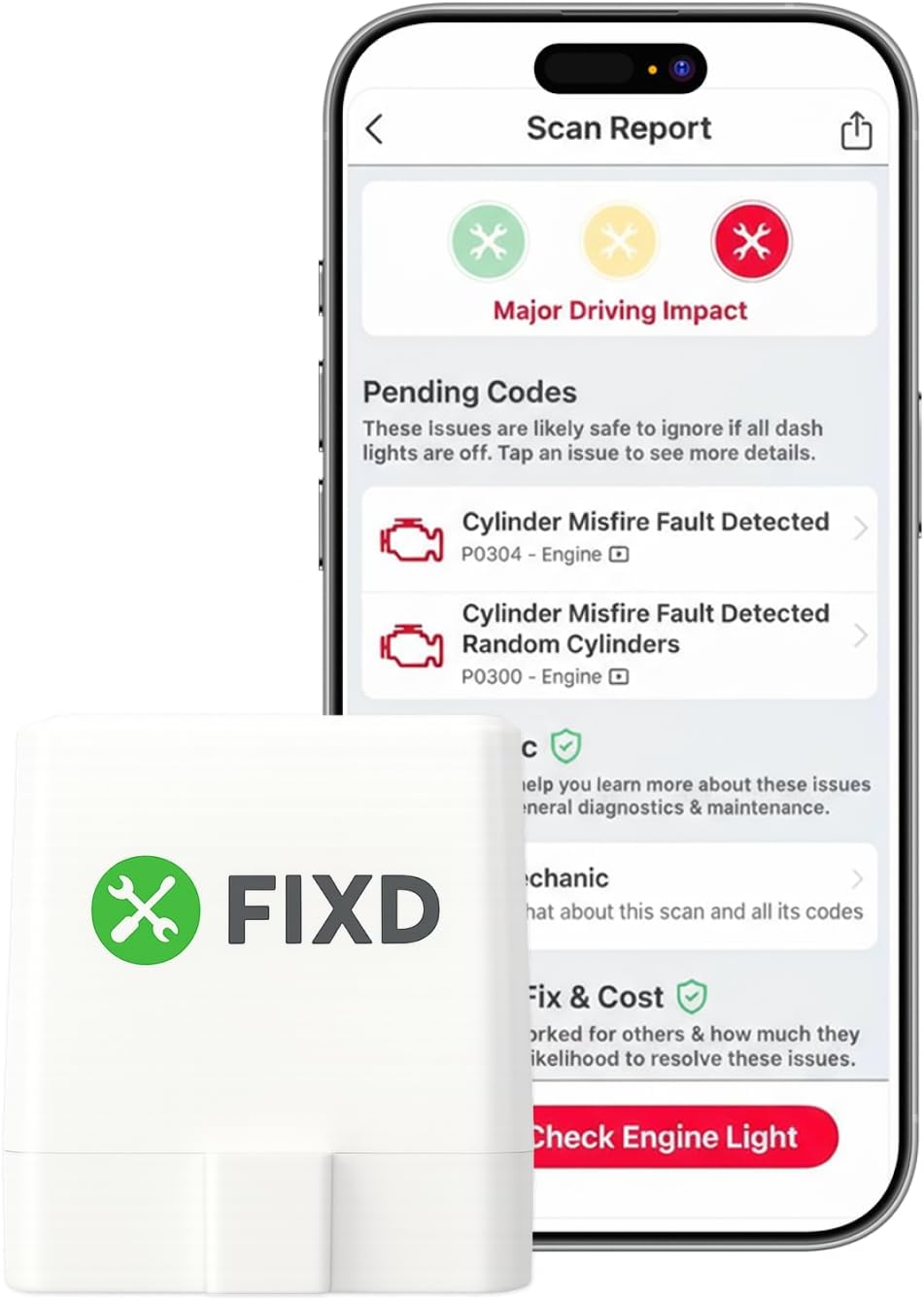
Best Bluetooth OBD2 Scanner
Detect 39,000+ Issues With Enhanced Codes. Save $1000s on car repairs & buying used vehicles by diagnosing problems yourself.
Shop on Amazon
Key Takeaways
- A Jeep Patriot check engine light signals an OBD-II system fault ranging from a loose gas cap to serious engine issues like misfire or throttle body failure; a steady light allows cautious driving, but a flashing light demands immediate attention to prevent catalytic converter damage.
- Use an inexpensive OBD-II scanner to read diagnostic trouble codes in seconds—most Patriots’ common codes like P0456 (loose cap) and P0128 (thermostat) are fixable DIY problems or low-cost repairs.
- The most frequent Jeep Patriot check engine light triggers include loose gas caps, carbon buildup on the throttle body, worn spark plugs, and failing ignition coils; simple manual checks often resolve the issue before professional help is needed.
- Never clear a diagnostic code without first repairing the underlying issue, as the fault will reappear within a drive cycle and you’ll need 50–100 miles of varied driving to reset readiness monitors.
- Prevent future check engine lights by using quality fuel, replacing air filters every 15,000–20,000 miles, performing throttle body cleaning at 30,000-mile intervals, and maintaining a service log to spot recurring patterns early.
Understanding the Check Engine Light System
How the Malfunction Indicator Lamp Works
The Malfunction Indicator Lamp (MIL), your check engine light, sits in your instrument cluster, waiting for trouble. When your Patriot’s engine control module (ECM) detects a parameter outside normal operating range, it logs a diagnostic trouble code (DTC) and triggers the light. Think of it as your vehicle’s way of raising its hand to say something’s wrong.
The light’s behavior tells you how urgent the problem is. A steady amber glow means the ECM found an issue that affects emissions or performance but isn’t immediately catastrophic. You can drive home, but you shouldn’t ignore it for weeks. A flashing check engine light is your Patriot screaming for help, it indicates active engine misfire that can overheat and destroy your catalytic converter within minutes. Pull over safely and arrange a tow or gentle drive to your garage.
Patriot models from 2007 to 2017 share similar MIL logic across both the 2.0L and 2.4L World Engine variants. The system monitors dozens of sensors: oxygen sensors, throttle position, mass airflow, coolant temperature, and evaporative emission components. When one fails or reads implausible data, the ECM lights your dash.
Role of the OBD II System in Diagnostics
Your Jeep Patriot uses the second-generation On-Board Diagnostics (OBD-II) standard, mandated on all vehicles sold in the U.S. since 1996. This system continuously runs self-tests called monitors or readiness checks. It watches fuel trim, catalyst efficiency, evaporative system integrity, and ignition timing. When a monitor fails, the ECM stores a five-character code, like P0456 or P0128, in its memory.
OBD-II makes diagnosis democratic. You plug a scanner into the 16-pin diagnostic port (located under your steering column, near the hood release) and pull the codes in seconds. No need to guess. The system tells you exactly which circuit or component triggered the fault. Some Patriots even support a “key dance” trick: turn the ignition from off to run three times in five seconds (without starting the engine), and the odometer display cycles through stored codes.
The beauty of OBD-II is standardization. Generic codes (P0xxx) work across all makes, while manufacturer-specific codes (P1xxx) address Chrysler/Jeep peculiarities. This means your $25 Bluetooth OBD-II adapter works just as well as a $3,000 dealership scan tool for reading basic faults. Once you know the code, you can research the fix, order parts, and tackle repairs yourself, or at least walk into a shop informed and confident.
Common Triggers and Error Codes
Typical Issues Behind the Warning
Jeep Patriots share a reputation for specific, recurring check engine light culprits. The most common? A loose or degraded gas cap. If you didn’t tighten it fully after your last fill-up, fuel vapors escape and trigger evaporative emission codes. It’s frustrating, but it’s also the easiest fix: twist the cap until it clicks three times.
Carbon buildup on the electronic throttle body (ETB) ranks as another frequent offender. The 2.4L engine, especially in CVT-equipped models, accumulates carbon deposits that interfere with the throttle plate’s movement. You’ll notice hesitation, rough idle, or even a red lightning bolt warning light alongside your check engine lamp. Cleaning the throttle body with throttle body cleaner spray often resolves the issue temporarily, but severe cases require a new ETB assembly.

Spark plugs in Patriots wear faster than average, many mechanics recommend replacement every 30,000 miles instead of the typical 60,000–100,000 intervals. Worn plugs cause misfires, especially on cold starts or under load. Ignition coil packs also fail, usually one cylinder at a time, producing a noticeable stumble and a misfire code.
Significance of Diagnostic Trouble Codes
Diagnostic trouble codes are your roadmap. Without them, you’re guessing. With them, you pinpoint the fault in minutes. Each code follows a structure: the first character (P for powertrain, B for body, C for chassis) tells you the system: the second digit (0 for generic, 1 for manufacturer) tells you who defined it: the third digit identifies the subsystem (1 = fuel/air, 2 = fuel/air, 3 = ignition, 4 = emission): and the final two digits specify the exact fault.
For example, P0456 breaks down as: P (powertrain), 0 (generic), 4 (emission control), 56 (very small evaporative leak detected). That code almost always points to a loose gas cap, a cracked EVAP hose, or a failed purge valve. Knowing this saves you from replacing expensive parts you don’t need.
Codes also carry pending, confirmed, and permanent status. A pending code means the ECM saw an issue once but hasn’t confirmed it over multiple drive cycles. A confirmed code triggered the check engine light. A permanent code won’t clear until the ECM verifies the fault is truly fixed through its drive cycle monitors.
Noteworthy OBD II Codes in Jeep Patriots
If you own a Patriot, these codes should be on your radar:
- P0456 – Evaporative Emission System Small Leak Detected (gas cap, EVAP hoses, purge valve)
- P0440 – Evaporative Emission System Malfunction (often ESIM valve failure)
- P2135 – Throttle Position Sensor A/B Voltage Correlation (electronic throttle body fault)
- P0128 – Coolant Thermostat Rationality (thermostat stuck open, common in colder climates)
- P0300 – Random/Multiple Cylinder Misfire Detected (worn spark plugs, coil packs, fuel delivery)
- P0301–P0304 – Cylinder-Specific Misfire (pinpoints which cylinder is misfiring)
- P0420 – Catalyst System Efficiency Below Threshold (failing catalytic converter or upstream O2 sensor)
- P0138 – O2 Sensor Circuit High Voltage Bank 1 Sensor 2 (downstream oxygen sensor failure)
“My 2014 Patriot threw P0456 three times in two months. Replaced the gas cap for $12 and haven’t seen it since.” via JeepPatriot.com Forums
Recurrence and Drive Cycle Behavior
Some codes pop up, you clear them, and they never return. Others come back like a bad penny. Understanding drive cycles explains why. The ECM needs specific operating conditions, cold start, highway cruise, idle, to re-run its monitors and confirm a repair. If you clear a code but don’t complete the drive cycle, the light returns because the underlying issue persists.
Patriots with intermittent faults (like a failing throttle position sensor) exhibit maddening on-again, off-again check engine lights. The sensor works fine when cold, glitches when hot, and the code appears only after 20 minutes of highway driving. You can’t diagnose it on a cold engine in your driveway. This is where live data from your OBD-II scanner becomes invaluable, you watch sensor voltages in real time and catch the glitch as it happens.
Diagnosis and Troubleshooting Techniques
Using an OBD II Scanner
Your first move when the check engine light appears: plug in an OBD-II scanner. You’ll find the diagnostic port under the dash, driver’s side, usually near the fuse panel or hood release. The port is a trapezoid-shaped, 16-pin connector. No tools required, just push the scanner in until it clicks.
Turn your ignition to the “run” position (don’t start the engine), and the scanner powers up. Select “Read Codes” and wait a few seconds. The scanner displays all stored codes, pending codes, and often freeze-frame data, a snapshot of engine conditions when the fault occurred. Write down every code. Don’t rely on memory.
Bluetooth OBD-II adapters pair with your smartphone and apps like Torque, BlueDriver, or OBD Fusion. These apps not only read codes but also provide live sensor data, readiness monitors, and even code definitions with suggested fixes. For under $30, you get diagnostic power that rivals professional tools from a decade ago.
Manual Checks for DIY Owners
Before you start replacing parts, run through these simple checks. They cost nothing and solve a surprising number of check engine lights:
- Gas cap: Remove it, inspect the rubber seal for cracks, clean any debris, and reinstall until you hear three clicks.
- Air filter: A clogged filter starves the engine of air, triggering rich-fuel codes. Pop the hood and check your airbox.
- Battery terminals: Corrosion or loose connections cause voltage drops that confuse sensors and light up your dash.
- Visible vacuum hoses: Look for cracked, disconnected, or deteriorated hoses around the intake manifold and throttle body.
- Coolant level: Low coolant can cause P0128 thermostat codes because the ECM expects faster warm-up.
For ignition misfires, pull each spark plug and inspect the electrode. If it’s worn, fouled, or gap exceeds spec (typically 0.050 inches for Patriots), replace the set. Spark plugs are cheap insurance. While you’re there, check the ignition coil connectors for oil intrusion, valve cover gasket leaks let oil seep into spark plug wells and short out coils.
“I had a flashing CEL and rough idle. Swapped all four spark plugs and coil on cylinder 3. Runs like new. Total cost: $85.” via /r/JeepPatriot
Professional Evaluation and When to Seek Help
Some faults demand professional diagnosis. If you see multiple codes across unrelated systems, suspect a wiring harness issue, corroded ground, or ECM fault. Chasing individual codes wastes time and money when the root cause is electrical.
A flashing check engine light always warrants immediate professional attention. This indicates severe misfire, unburned fuel entering the exhaust. That fuel ignites in the catalytic converter, causing internal temperatures to spike beyond 1,400°F and melting the catalyst substrate. A $150 misfire repair becomes a $1,200 converter replacement if you keep driving.
If you’re not comfortable working with electrical connectors, fuel system components, or emission controls, find a trustworthy independent shop. According to RepairPal, the average Patriot check engine light diagnostic costs between $88 and $111, far less than guessing and replacing the wrong parts. Many auto parts stores offer free code scanning, but they can’t interpret live data or perform pinpoint tests like a trained technician can.
Preventative Actions and Long-Term Care
Best Practices to Avoid Future Issues
Prevention beats repair every time. Start with quality fuel. Cheap gas contains more contaminants and lower detergent levels, accelerating carbon buildup on intake valves and throttle bodies. Fill up at Top Tier stations, brands like Shell, Chevron, Costco, and Mobil meet higher detergent standards.
Don’t ignore small symptoms. A slight hesitation on acceleration, rough idle, or occasional stumble often precedes a check engine light by weeks. Address these early, and you’ll avoid more expensive repairs later. Keep a simple maintenance log: oil changes, air filter replacements, spark plug swaps. Patterns emerge, and you’ll spot recurring issues faster.
Replace your engine air filter every 15,000–20,000 miles, or sooner if you drive dusty roads. A clean filter improves airflow, fuel economy, and throttle response while reducing stress on your mass airflow sensor. Similarly, change your cabin air filter annually to maintain proper HVAC system function, it won’t trigger a check engine light, but a clogged cabin filter restricts airflow and strains the blower motor.
Maintaining Emissions and Ignition Systems
Your Patriot’s emissions system thrives on regular attention. Inspect EVAP hoses and connections during oil changes. These rubber lines become brittle over time, especially in hot engine bays, and small cracks cause persistent P0456 or P0440 codes. OEM replacement hoses are inexpensive and readily available.
Throttle body cleaning should be part of your 30,000-mile service routine. Remove the intake duct, spray throttle body cleaner onto a clean rag (never spray directly into the throttle bore while the engine is running), and gently wipe carbon deposits from the throttle plate and bore. This simple 10-minute task prevents P2135 codes and restores smooth throttle response.
For ignition system longevity, use OEM-spec spark plugs. Patriots require copper-core or iridium plugs gapped to precise specifications. Aftermarket “performance” plugs often cause more problems than they solve. Replace plugs and inspect ignition coils every 30,000 miles. Coils don’t have a fixed lifespan, they fail based on heat cycles, vibration, and electrical stress, but proactive replacement prevents roadside misfires.
Addressing Codes Before Resetting
Here’s a mistake many DIYers make: they clear the code without fixing the underlying issue, then wonder why the light returns 20 miles later. The OBD-II system isn’t punishing you, it’s doing its job. If the fault persists, the code reappears, often within a single drive cycle.
Always repair first, clear second. Once you’ve replaced the faulty component or corrected the condition, use your scanner to clear codes and reset readiness monitors. Then drive the vehicle through a complete drive cycle: cold start, city driving, steady highway cruise, and idle. The ECM re-runs its monitors and, if everything passes, the check engine light stays off.
Some states require all readiness monitors to show “ready” status before you can pass emissions testing. Clearing codes resets these monitors to “not ready,” and you’ll need 50–100 miles of varied driving to set them again. Plan accordingly if your registration renewal is approaching.
Finally, keep records. Snap photos of your scanner screen showing codes, freeze-frame data, and repairs performed. If a code recurs, you’ll have a history to reference. This documentation also adds value if you sell your Patriot, a well-maintained service history with documented repairs commands higher resale prices and buyer confidence.
Frequently Asked Questions
What does a check engine light mean on a Jeep Patriot?
A check engine light indicates your Jeep Patriot’s onboard diagnostic system (OBD-II) detected a fault in the emissions, ignition, or engine management system. A solid amber light means you can drive cautiously and diagnose soon, while a flashing light signals severe engine misfire requiring immediate attention to prevent catalytic converter damage.
How do I diagnose a Jeep Patriot check engine light?
Use an inexpensive OBD-II scanner plugged into the diagnostic port under your steering column. The scanner reads diagnostic trouble codes (DTCs) that identify the exact fault. Bluetooth adapters and smartphone apps like Torque or BlueDriver provide live sensor data and code definitions for under $30, rivaling professional diagnostic tools.
What are the most common check engine light codes in Jeep Patriots?
Common Patriot codes include P0456 (loose gas cap or evaporative leak), P2135 (throttle body fault), P0128 (thermostat issues), P0300–P0304 (spark plug or coil misfires), P0420 (catalytic converter efficiency), and P0440 (evaporative system malfunction). Each code pinpoints the specific system failing.
Can a loose gas cap trigger a check engine light on a Jeep Patriot?
Yes. A loose or degraded gas cap is the most common Patriot check engine light culprit, triggering P0456 evaporative emission codes. Fuel vapors escape if not tightened fully. Simply twist the cap until it clicks three times. This $12 fix resolves the issue permanently for many owners.
How much does it cost to diagnose a Jeep Patriot check engine light?
Professional diagnostic costs range from $88 to $111 according to RepairPal, far less than replacing parts blindly. Many auto parts stores offer free code scanning. Investing in a $25 OBD-II scanner lets you diagnose issues yourself and understand repair needs before visiting a mechanic.
What should I do if my Jeep Patriot check engine light is flashing?
A flashing check engine light indicates severe engine misfire requiring immediate attention. Stop driving and arrange a tow to your garage. Continued driving allows unburned fuel to ignite in the catalytic converter, reaching temperatures exceeding 1,400°F and causing converter damage costing $1,200+ to repair.
Read More:
- Jeep Check Engine Light (Here’s the Quick Diagnostic Guide)
- Jeep Cherokee Check Engine Light (Means and How to Fix It Fast)
- Jeep Grand Cherokee Check Engine Light (Means and Triggers Explained)
- Jeep Compass Check Engine Light (Here’s the Fixes You Can Do)
- Jeep Renegade Check Engine Light (Here’s the Quick Fix Guide)