
Your Honda CR-V’s check engine light just turned on, and you’re wondering if it’s safe to drive. Don’t panic, most triggers aren’t emergencies, but understanding the difference matters.
When your Honda CR-V check engine light illuminates, it signals the onboard computer has detected a malfunction affecting emissions, fuel delivery, ignition, or sensor performance: a steady amber light typically permits cautious driving to a repair shop, while a flashing light indicates severe engine misfire demanding immediate shutdown to prevent catalytic converter damage.
This guide walks you through immediate safety checks, the most common CR-V fault codes across 1.5T, 2.4L, and hybrid generations, how to read diagnostic trouble codes with an OBD-II scanner, and a sensible repair-and-reset plan to keep your crossover running smoothly without overpaying for unnecessary parts.
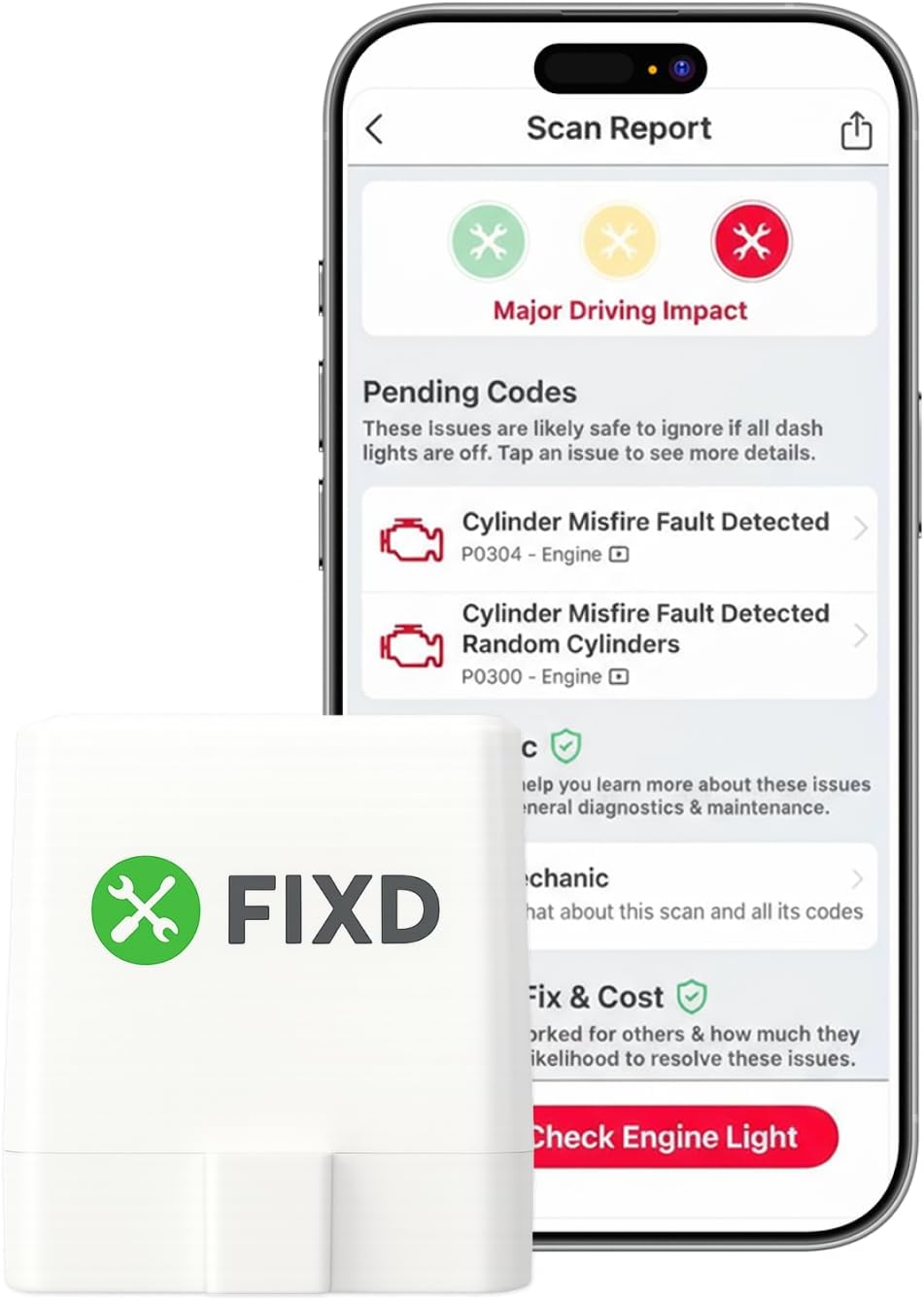
Best Bluetooth OBD2 Scanner
Detect 39,000+ Issues With Enhanced Codes. Save $1000s on car repairs & buying used vehicles by diagnosing problems yourself.
Shop on Amazon
Key Takeaways
- A steady Honda CR-V check engine light allows cautious driving to a shop, but a flashing light signals severe misfire requiring immediate shutdown to prevent catalytic converter damage costing $1,800+.
- Inspect your fuel cap first—a loose or damaged gas cap is the number-one cause of P0455 EVAP leak codes and is a simple $20 fix that often resolves the Honda CR-V check engine light on its own.
- Common fault codes like P0300 (misfire), P0171 (lean system), and P0420 (low converter efficiency) typically stem from worn spark plugs, dirty MAF sensors, or failing O2 sensors rather than expensive parts replacements.
- Always use an OBD-II scanner to retrieve and log diagnostic codes before replacing parts—dealerships often recommend catalytic converter replacement for P0420 when a faulty upstream O2 sensor is often the real culprit.
- Verify repairs work by completing two full warm-up cycles before clearing the check engine light; clearing codes without fixing the root cause guarantees the warning returns within days.
- Regular maintenance—synthetic oil every 5,000 miles on 1.5T models, spark-plug inspection at 30,000 miles, and fuel-system cleaner every six months—prevents sensor drift and keeps your Honda CR-V running smoothly without check engine warnings.
What the Light Means and When to Stop Driving
Steady Versus Flashing Warning Light
A solid amber check engine light means the powertrain control module (PCM) logged a fault code and stored it in memory. You’ll notice normal acceleration, smooth idling, and no dramatic loss of power. This steady glow gives you a short window, usually a few days, to diagnose the issue before driving habits or weather conditions worsen the problem.
A flashing check engine light signals an active misfire severe enough to dump unburned fuel into the exhaust. That raw fuel superheats your catalytic converter, risking permanent honeycomb meltdown and a repair bill north of $1,800. Pull over safely, turn off the engine, and arrange a tow or very short crawl to a shop at low RPM.
Immediate Safety Checks Before Driving Further
Before you restart, open the hood and listen for vacuum hissing, check coolant and oil levels through the dipstick and reservoir, and look for loose or disconnected hoses around the intake manifold. On 1.5T models, low oil can starve the VTEC oil pressure switch and trigger P2646 or P1259 codes, especially if you’re between oil changes.
Inspect your fuel filler door. A loose, cross-threaded, or cracked gas cap is the number-one cause of P0455 and P1457 EVAP leak codes on CR-Vs. Tighten it until you hear three clicks, then drive through two complete warm-up cycles to see if the light clears on its own.
Why an Active Misfire Requires Urgent Service
Misfire codes, P0300 (random), P0301 (cylinder one), P0302, P0303, or P0304, mean combustion failed in one or more cylinders. When fuel doesn’t ignite, it enters the exhaust stream still liquid. The catalytic converter tries to oxidize that fuel, spiking internal temperatures beyond 1,600°F and melting the ceramic substrate.
Continued driving also washes cylinder walls with gasoline, diluting your engine oil and accelerating bearing wear. On 1.5T engines already prone to oil dilution in cold climates, a misfire compounds the problem fast. Address misfires within 24 hours to protect both the converter and internal engine components.
Most Likely Causes and Related Symptoms
Loose or Damaged Gas Cap and EVAP Leaks
The evaporative emissions (EVAP) system prevents fuel vapors from escaping the tank. A missing, worn, or improperly seated gas cap breaks the seal, letting the PCM detect a large leak and store P0455. Smaller leaks, cracked purge valve diaphragms, split vent hoses, or a faulty canister close valve, trigger P0456 or P1457.
Symptoms include a faint fuel smell near the rear quarter panel, especially after refueling on a hot day. Replacing a genuine Honda gas cap costs around $20 and takes thirty seconds. If tightening doesn’t clear the code after two drive cycles, inspect the purge valve and vent solenoid under the vehicle near the fuel tank.
Oxygen and Mass Airflow Sensor Faults
Your CR-V mounts upstream O2 sensors in each exhaust manifold and a downstream sensor after the catalytic converter. Over time, carbon deposits, oil contamination, or sensor-element aging cause sluggish voltage switching, triggering P0131, P0133, P0137, or P0141. You’ll notice poor fuel economy, rough idle, and hesitation during moderate acceleration.
A dirty or failing mass airflow (MAF) sensor misreports incoming air volume, pushing the fuel trim so rich or lean that the PCM can’t compensate. Code P0171 (system too lean) or P0172 (too rich) often points to a fouled MAF on the intake tube between the air filter and throttle body. Cleaning the hot-wire element with MAF-specific cleaner can restore accurate readings without replacing the $150–$250 sensor.
“Had P0420 and P0172 on my 2017 CR-V 1.5T at 68k miles. Replaced both upstream O2 sensors and cleared codes, fuel economy jumped back to 31 MPG highway.” via CR-V Owners Club Forum
Spark Plugs, Ignition Coils, and Misfires
Honda recommends spark-plug replacement every 30,000–60,000 miles depending on plug type (copper versus iridium). Worn electrodes increase the gap, demanding higher voltage the ignition coil can’t always deliver. When the coil or plug fails, you get a cylinder-specific misfire: P0301 through P0304.
Symptoms include rough idle, stumbling under load, and a palpable shake at stop lights. Pull the coil and plug from the misfiring cylinder, inspect for oil fouling or carbon tracking, and swap the coil with an adjacent cylinder. If the misfire moves, replace the coil: if it stays, replace the plug. Use OEM NGK or Denso plugs torqued to 13 lb-ft to avoid stripping aluminum threads.
Catalytic Converter and Exhaust Emissions Problems
Code P0420 (catalyst system efficiency below threshold, bank one) appears when the downstream O2 sensor mirrors the upstream sensor too closely, indicating the converter isn’t scrubbing enough pollutants. Before you buy a $1,200 converter, verify the upstream O2 sensors respond correctly and check for exhaust leaks ahead of the cat that let fresh air skew readings.
In many cases, prolonged short trips, oil consumption, or low-quality fuel fouls the catalyst without destroying it. An Italian tune-up, 15 minutes of highway driving at 3,000+ RPM, can burn off light deposits. If efficiency remains low and you’re over 100,000 miles, replacement is likely, but always confirm with a scanner’s live O2 data before authorizing the work.
Read Codes Before Replacing Parts
Using an OBD-II Scanner to Retrieve Codes
Every 1996-and-newer Honda CR-V includes a standardized 16-pin OBD-II diagnostic port under the driver-side dash, left of the steering column. Plug in a basic code reader like the ANCEL AD310 scanner or a Bluetooth adapter paired with the Torque Pro app on your smartphone.
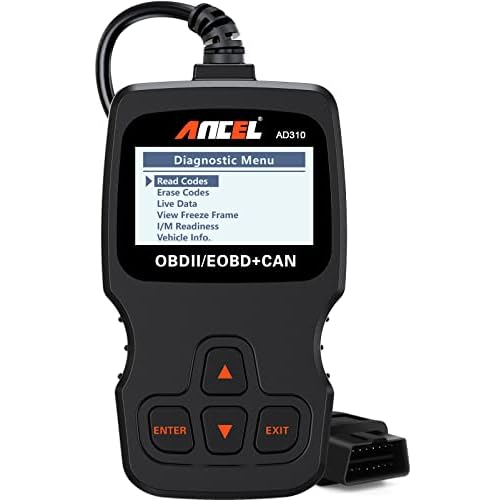
Turn the ignition to “On” without starting the engine, then press “Read” or “Scan.” The tool displays all stored and pending codes. Write them down, don’t rely on memory, and note whether they’re confirmed (hard codes) or pending (intermittent). Pending codes won’t trigger the light but hint at borderline sensor performance.
How to Interpret Diagnostic Trouble Codes
Each five-character code follows a pattern: the first letter indicates the system (P for powertrain, B for body, C for chassis), the second digit shows generic (0) or manufacturer-specific (1), and the remaining three digits pinpoint the fault.
| Code | System | Common Cause | Typical Fix |
|---|---|---|---|
| P0455 | EVAP | Large leak (loose cap, cracked hose) | Tighten or replace gas cap, inspect purge valve |
| P0420 | Catalyst | Low converter efficiency, O2 drift | Verify upstream O2 sensors, replace cat if needed |
| P0300 | Ignition | Random misfire multiple cylinders | Check plugs, coils, fuel pressure |
| P2646 | VVT | VTEC oil pressure switch (1.5T/2.4L) | Replace switch, verify oil level and viscosity |
| P0171 | Fuel | System too lean (air leak, dirty MAF) | Clean MAF, inspect intake boots for cracks |
Cross-reference your code with Honda service bulletins on NHTSA’s database or the Honda TSB library to see if a known fix or recall applies to your model year.
Why P0420 Does Not Automatically Mean a New Converter
Dealerships and chain shops often jump straight to catalytic-converter replacement when they see P0420, because it’s a high-margin part. But the code only reports low efficiency, it doesn’t confirm physical damage. A failing upstream O2 sensor, exhaust leak before the cat, or even using the wrong oil weight can mimic converter failure.
Use live data to watch upstream and downstream O2 sensor voltage while the engine idles at operating temperature. The upstream sensor should toggle rapidly between 0.1 and 0.9 volts: the downstream should stay steady near 0.5 volts. If the downstream sensor toggles in sync with the upstream, the converter isn’t converting. If the upstream is lazy or flat, replace that sensor first and retest after two drive cycles.
Repair, Reset, and Prevention Plan
Fix the Underlying Fault Before Clearing the Light
Clearing codes without repairing the root cause guarantees the light returns within one to three drive cycles, and you’ll have wasted your time. Once you’ve replaced the faulty sensor, coil, plug, or cap, drive the vehicle through at least two complete warm-up cycles, cold start to full operating temperature, then back to cold, so the PCM can verify the repair.
After confirming normal operation, reconnect your scanner and select “Clear Codes” or “Erase DTCs.” The check engine light will turn off immediately. If it illuminates again before you complete a full tank of fuel, recheck your work or investigate pending codes you may have missed.
When to Use a Honda Dealership or Independent Shop
Dealerships offer genuine parts, Honda-trained technicians, and access to the latest technical service bulletins. They’re your best choice for warranty work, recalls, or complex driveability issues on newer CR-Vs still under factory coverage. Expect diagnostic fees around $130–$180 and labor rates near $140 per hour in metropolitan areas.
Independent shops with ASE-certified techs and Honda-specific scan tools, like the BlueDriver Bluetooth Pro scanner, deliver comparable diagnostics at 30–50 percent lower labor rates. Look for shops that specialize in Asian imports and can source OEM-equivalent parts from Denso, NGK, or Aisin. Always ask for a written estimate before authorizing repairs over $300.

“My local independent shop diagnosed P1457 EVAP canister purge valve on my 2019 CR-V for $89. Dealer wanted $150 just to plug in. Part was $62, labor another $95, saved over $200 total.” via r/Honda
Maintenance That Helps Prevent Repeat Warnings
Stick to Honda’s recommended oil-change intervals, every 5,000 miles with 0W-20 synthetic on 1.5T engines to prevent VTEC solenoid codes and oil dilution. Replace the engine air filter every 15,000–30,000 miles to keep the MAF sensor clean and combustion efficient. Inspect spark plugs at 30,000 miles, even if the manual says 60,000, especially if you drive mostly short trips in cold weather.
Run a bottle of quality fuel-system cleaner like Techron or Sea Foam through a full tank every six months to dissolve intake-valve and injector deposits. Keep your fuel tank above one-quarter to prevent sediment from clogging the fuel pump screen. These small habits reduce sensor drift, extend catalytic-converter life, and keep your check engine light off for the long haul.
Frequently Asked Questions
What does a flashing check engine light mean on a Honda CR-V?
A flashing check engine light indicates an active, severe engine misfire that’s dumping unburned fuel into the exhaust. This superheats your catalytic converter and risks permanent damage costing $1,800+. Pull over immediately, turn off the engine, and arrange a tow to prevent converter failure.
Is it safe to drive my Honda CR-V with a steady check engine light?
A steady amber check engine light permits cautious driving to a repair shop. It signals the PCM logged a fault code but isn’t an active misfire. You typically have a few days to diagnose before conditions worsen, though you should get diagnostic codes read promptly.
What is the most common cause of a Honda CR-V check engine light?
A loose, damaged, or missing gas cap is the number-one trigger, causing P0455 or P1457 EVAP leak codes. Tighten it until you hear three clicks and drive two complete warm-up cycles. If the light persists, inspect the purge valve and vent solenoid near the fuel tank.
Can I drive my Honda CR-V with a P0420 code?
Yes, a P0420 catalyst efficiency code allows safe driving to a shop. However, don’t assume you need a new converter immediately. Verify your upstream O2 sensors respond correctly and check for exhaust leaks first—a failing O2 sensor, not the converter, often triggers this code.
How do I read Honda CR-V diagnostic trouble codes without a mechanic?
Locate the OBD-II port under the driver-side dash, left of the steering column. Plug in a basic code reader like the ANCEL AD310 or use a Bluetooth adapter with the Torque Pro app. Turn the ignition on without starting, press Read, and note all stored and pending codes.
What maintenance prevents the check engine light from returning on a Honda CR-V?
Follow Honda’s oil-change intervals every 5,000 miles with 0W-20 synthetic on 1.5T engines, replace the air filter every 15,000–30,000 miles, inspect spark plugs at 30,000 miles, and run fuel-system cleaner every six months to prevent sensor drift and catalytic-converter fouling.
Read More:
- Honda Check Engine Light (Means, Causes and How to Decode)
- Jeep Check Engine Light (Here’s the Quick Diagnostic Guide)
- Dodge Check Engine Light (Quick Codes & Fixes for HEMI & Pentastar)
- Ford Check Engine Light (Means and Step-By-Step Diagnosis)
- BMW Check Engine Light (Quick Diagnostic Guide to Fix It Fast)