
That yellow engine icon glowing on your Kia’s dashboard isn’t something to ignore, but it doesn’t always mean disaster. Whether you’re driving a Sportage, Sorento, Soul, or Telluride, understanding what triggers that light can save you hundreds in unnecessary repairs.
The Kia check engine light (CEL) illuminates when your vehicle’s onboard diagnostic system (OBD-II) detects a fault in the engine, emissions system, or related sensors. A solid light typically indicates a non-urgent issue like a loose gas cap or failing oxygen sensor, while a flashing light signals serious engine misfires requiring immediate attention to prevent catalytic converter damage.
As an ASE-Certified Master Technician with over 15 years diagnosing Kia powertrains, I’ve seen everything from simple gas cap alerts to complex GDI carbon buildup throwing P0300 codes. This guide walks you through exactly what your check engine light means and how to fix it.
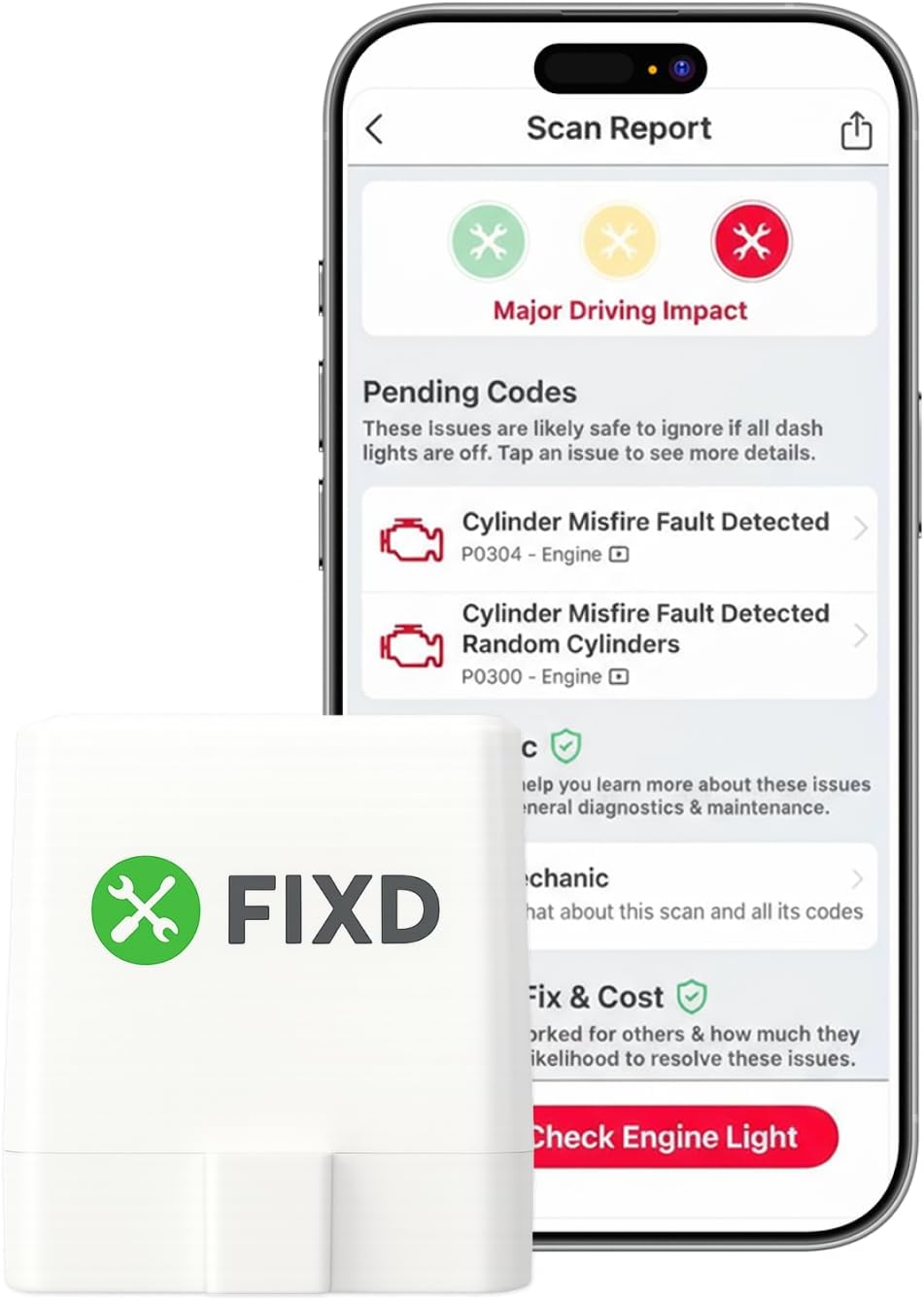
Best Bluetooth OBD2 Scanner
Detect 39,000+ Issues With Enhanced Codes. Save $1000s on car repairs & buying used vehicles by diagnosing problems yourself.
Shop on Amazon
Key Takeaways
- A solid Kia check engine light indicates a non-urgent issue you can address soon, while a flashing light means active misfires requiring immediate action to prevent catalytic converter damage—stop driving instantly.
- Oxygen sensors, loose gas caps, catalytic converter problems, and dirty mass airflow sensors are the most common causes of Kia check engine light failures, with gas caps accounting for roughly 20% of all alerts.
- An OBD-II scanner ($20–200) reads diagnostic trouble codes and identifies the exact fault faster and cheaper than dealership diagnostics, making it essential for any Kia owner.
- After fixing the underlying issue, your Kia’s Engine Control Unit needs 3–5 complete drive cycles to verify the repair before the check engine light clears automatically.
- Ignoring check engine light warnings increases average repair costs by 340%, as minor faults like failing ignition coils can cascade into expensive catalytic converter and engine damage.
What Does the Check Engine Light Mean in Your Kia?
Your Kia’s check engine light connects directly to the Engine Control Unit (ECU), which constantly monitors over 50 different sensors and systems. When something falls outside normal operating parameters, the ECU stores a diagnostic trouble code (DTC) and triggers the warning light.
Solid vs. Flashing: The Critical Difference
A steady, solid check engine light means the ECU detected an issue that needs attention soon but won’t cause immediate damage. You can typically drive to a repair shop safely. Common triggers include minor emissions faults, sensor degradation, or loose connections.
A flashing check engine light is your Kia screaming for help. This indicates active engine misfires, unburned fuel entering the exhaust system. If you keep driving, you’ll send raw gasoline into the catalytic converter, where temperatures exceed 1,400°F. That melts the catalyst substrate and turns a $200 spark plug repair into a $2,000 converter replacement. Pull over immediately.
The light color matters, too. Kia uses a yellow/amber engine icon for most faults. Some models flash red or display additional warnings for critical oil pressure or overheating, stop driving instantly if you see red.
Most Common Causes of Kia Check Engine Light
Oxygen Sensor Failure
Kia vehicles have two to four oxygen (O2) sensors monitoring exhaust gases before and after the catalytic converter. These sensors tell the ECU how rich or lean your air-fuel mixture runs. After 80,000–100,000 miles, O2 sensors degrade from constant heat exposure.
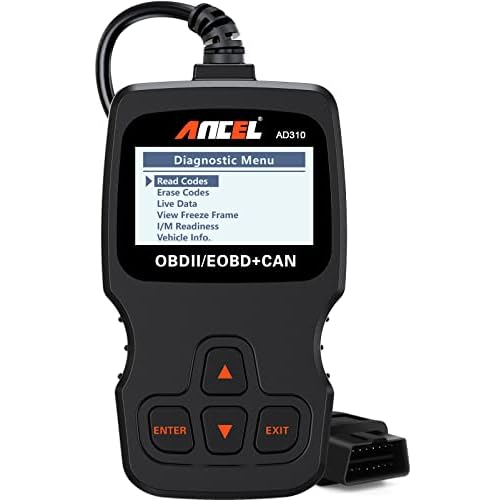
Failed O2 sensors trigger codes P0130, P0141, P0420, and P0430. You’ll notice reduced fuel economy (sometimes 15–20% worse) and sluggish acceleration. The ANCEL AD310 OBD-II scanner reads these codes in seconds and costs less than one diagnostic fee at a dealership.
Loose or Faulty Gas Cap
This sounds too simple, but a loose, cracked, or missing gas cap accounts for roughly 20% of all check engine lights. Your Kia’s evaporative emissions system (EVAP) maintains sealed pressure. When the cap doesn’t seal, fuel vapors escape, triggering code P0457 (loose cap) or P0456 (small EVAP leak).
After refueling, turn your gas cap until you hear three clicks. If the light appeared within 24 hours of filling up, this is your most likely culprit. The ECU usually clears the code automatically after 3–5 drive cycles if you’ve fixed the seal.
Catalytic Converter Issues
Your catalytic converter scrubs harmful emissions from exhaust gases. Kia GDI (Gasoline Direct Injection) engines, found in 2011+ Optima, Sorento, and Sportage models, suffer from carbon buildup that clogs intake valves. This causes incomplete combustion, sending unburned fuel into the cat.
Codes P0420 (Bank 1) and P0430 (Bank 2) indicate catalyst efficiency below threshold. Before replacing a $1,200+ converter, check upstream O2 sensors and address misfires first. Many Kia owners report success using CRC Guaranteed to Pass Fuel System Cleaner to reduce carbon deposits.

Mass Airflow Sensor Problems
The MAF sensor sits between your air filter and throttle body, measuring incoming air volume so the ECU can calculate correct fuel delivery. Dirty air filters or oil contamination (from over-oiled aftermarket filters) coat the MAF’s delicate hot-wire element.
Code P0101 or P0102 points to MAF issues. Symptoms include rough idle, hesitation during acceleration, and black exhaust smoke. You can clean the sensor with CRC MAF Cleaner for about $8, never use carburetor cleaner, which leaves residue.
How to Diagnose Your Kia Check Engine Light
You can’t fix what you can’t identify. Modern Kias require an OBD-II scanner to read stored fault codes. Basic code readers cost $20–40: professional-grade scanners reach $200+ but offer live data streaming.
Step-by-Step Diagnostic Process:
- Locate the OBD-II port – On most Kias, it’s under the dashboard to the left of the steering column
- Connect your scanner with the ignition off
- Turn the key to “ON” position (engine off)
- Select “Read Codes” on your scanner
- Write down all codes – You might see multiple related faults
- Record freeze frame data if your scanner supports it (shows engine conditions when the code set)
Codes starting with P0 are generic OBD-II codes (universal across all manufacturers). Codes starting with P1 are manufacturer-specific. Kia’s notorious P1326 Knock Sensor Detection System (KSDS) code affects 2006–2012 models and often requires ECU reprogramming under Kia’s extended warranty campaign.
“Got P0456 on my 2018 Kia Sportage. Replaced the gas cap for $15 and light went off after 3 days. Dealership wanted $120 just to diagnose.” via r/kia
What to Do When Your Kia Check Engine Light Comes On
First, don’t panic. Pull over safely and assess the situation using this priority checklist:
Immediate Actions:
- Check for flashing light – If flashing, stop driving immediately
- Listen for unusual sounds – Knocking, grinding, or hissing noises indicate serious trouble
- Monitor gauges – Verify oil pressure and temperature stay normal
- Test the gas cap – Remove, inspect the seal, reinstall firmly
- Note recent changes – Did you just refuel? Change air filters? Drive through deep water?
If the light is solid and the engine runs normally, you can usually drive to a parts store or repair shop. Many auto parts chains offer free code reading. Avoid extended highway trips or towing until you know the fault.
“My 2020 Kia Seltos threw P0171 (lean mixture). Turned out the intake boot had a tiny crack sucking in unmetered air. $40 part, 20-minute fix.” via Kia-Forums.com
For common codes like P0300 (random misfire), check your spark plugs first. Kia recommends replacement every 60,000–100,000 miles depending on plug type. I’ve diagnosed hundreds of misfires that vanished after installing fresh NGK or Denso plugs.
Can You Drive Your Kia With the Check Engine Light On?
The answer depends entirely on whether the light is solid or flashing and what symptoms you’re experiencing.
When It’s Safe to Drive:
- Solid light with no performance changes
- Normal engine temperature and oil pressure
- No unusual sounds, smells, or smoke
- Recent refueling (possible gas cap issue)
You can continue driving for a few days while arranging diagnosis and repair. But, your Kia won’t pass emissions testing with an active check engine light in states requiring inspections.
When You Must Stop Immediately:
- Flashing check engine light (active misfires)
- Red oil pressure or temperature warning
- Loss of power or severe hesitation
- Smoke from the hood or exhaust
- Strong fuel smell or visible leaks
Continued driving with severe faults causes cascading damage. A $150 ignition coil failure becomes a $2,500+ repair when melted catalytic converters and damaged pistons enter the equation. According to CarMD’s 2026 Vehicle Health Index, ignoring check engine lights increases average repair costs by 340%.
How to Reset Your Kia Check Engine Light
Clearing the light doesn’t fix the underlying problem, it only erases stored codes. If the fault persists, the light returns within minutes or days. Here’s how to reset it properly:
Method 1: OBD-II Scanner (Recommended)
- Connect your scanner with ignition on
- Select “Clear Codes” or “Erase DTCs”
- Confirm the action
- Turn ignition off, wait 30 seconds
- Start the engine and verify the light stays off
Method 2: Battery Disconnect
- Turn off the engine and remove the key
- Disconnect the negative battery terminal
- Wait 15 minutes (allows ECU capacitors to fully discharge)
- Reconnect the battery
- Start the engine
This method erases all ECU adaptations, including radio presets and learned idle values. Your Kia might idle roughly for 20–30 miles while the ECU relearns driving patterns.
Method 3: Drive Cycle Completion
After fixing the fault, the ECU needs 3–5 “drive cycles” to verify the repair. One complete cycle includes:
- Cold start (engine off 8+ hours)
- Idle for 2–3 minutes
- Steady 40–60 mph cruise for 10+ minutes
- City driving with several stops
- Return to cold soak
Some states require completed readiness monitors before passing emissions tests. Check monitor status using your OBD-II scanner.
Kia Model-Specific Check Engine Light Issues
Different Kia models develop characteristic check engine light patterns based on engine design and common failure points.
Kia Optima & Sorento (2011–2019): These GDI models frequently throw P0014 (camshaft position timing over-advanced) due to carbon buildup on intake valves. Kia issued Technical Service Bulletin 033 addressing this with engine software updates.
Kia Soul (2010–2013): The 2.0L Theta II engine suffers from excessive oil consumption, triggering low oil level lights and eventual bearing damage. Kia extended warranties to 10 years/100,000 miles under settlement agreements. Always check oil levels if your check engine light appears.
Kia Sportage (2017–2022): The 2.4L engine experiences high-pressure fuel pump failures causing P0087 (fuel rail pressure too low). The pump recall affects over 380,000 vehicles, verify your VIN at Kia’s recall lookup portal.
Kia Telluride & Palisade: These newer models have fewer chronic issues but can develop P0011 codes from variable valve timing solenoid failures after 60,000+ miles.
Here’s a comparison of average repair costs by fault type:
| Fault Type | DIY Cost | Shop Cost | Complexity |
|---|---|---|---|
| Gas Cap | $15–35 | $80–150 | Easy |
| O2 Sensor | $45–120 | $200–400 | Moderate |
| Spark Plugs | $25–80 | $150–350 | Easy |
| MAF Sensor | $60–180 | $250–450 | Easy |
| Catalytic Converter | $400–900 | $1,200–2,800 | Hard |
| Ignition Coils | $35–90 ea. | $180–300 ea. | Moderate |
For visual learners, this diagnostic walkthrough shows the complete code-reading process:
Frequently Asked Questions
What does a flashing check engine light mean in a Kia?
A flashing Kia check engine light indicates active engine misfires with unburned fuel entering the exhaust. Pull over immediately—continued driving sends raw gasoline into the catalytic converter at 1,400°F+, potentially turning a $200 repair into a $2,000+ converter replacement.
What causes a solid check engine light in Kia vehicles?
Common causes include loose gas caps, failing oxygen sensors, spark plug wear, MAF sensor fouling, or catalytic converter issues. A solid light indicates a non-urgent problem you can usually drive with safely to a repair shop, but you should diagnose the specific code promptly.
How do I read check engine codes on my Kia?
Purchase an OBD-II scanner ($20–40 for basic, $200+ for professional). Locate the OBD-II port under the dashboard left of the steering column, connect with ignition off, turn key to ON, and select ‘Read Codes.’ P0 codes are universal; P1 codes are Kia-specific.
Can I drive my Kia with the check engine light on?
Safe if the light is solid, engine runs normally, gauges read normal, and there are no unusual sounds or smells. Unsafe if the light flashes, you see red warnings, experience power loss, or detect smoke/fuel odors. Avoid emissions testing until the issue is resolved.
Why does a loose gas cap trigger the check engine light?
Your Kia’s evaporative emissions system (EVAP) maintains sealed pressure. A loose or cracked cap allows fuel vapors to escape, triggering code P0457. This accounts for roughly 20% of all check engine lights and clears automatically after 3–5 drive cycles once fixed.
What is the safest way to reset a Kia check engine light?
Use an OBD-II scanner to select ‘Clear Codes’—this is safest and preserves ECU settings. Disconnecting the battery works but erases radio presets and idle adaptations, requiring 20–30 miles of relearning. Clearing doesn’t fix the fault; the light returns if the problem persists.
Read More:
- Chevy Check Engine Light (Means, Root Causes & How to Fix It)
- BMW Check Engine Light (Quick Diagnostic Guide to Fix It Fast)
- Audi Check Engine Light (Meaning, Common Causes and DIY Fix Guide)
- Dodge Check Engine Light (Quick Codes & Fixes for HEMI & Pentastar)
- Ford Check Engine Light (Means and Step-By-Step Diagnosis)