
That amber glow on your dashboard doesn’t mean your engine’s about to explode. But it shouldn’t be ignored, either. The check engine light signals something in your vehicle’s emission control or powertrain system has triggered a diagnostic code.
Your check engine light on solid means your onboard computer (ECM) detected a problem and stored a diagnostic trouble code (DTC) in memory. Unlike a flashing light, which signals severe misfires requiring immediate shutdown, a solid amber light indicates you can drive short distances safely while you investigate. Common triggers include a loose gas cap, failing oxygen sensor, worn spark plugs, dirty mass airflow sensor, or catalytic converter efficiency loss.
This guide walks you through immediate diagnostic steps, explains the most frequent DTC codes, and helps you decide whether you need a mechanic today or can wait until next week.
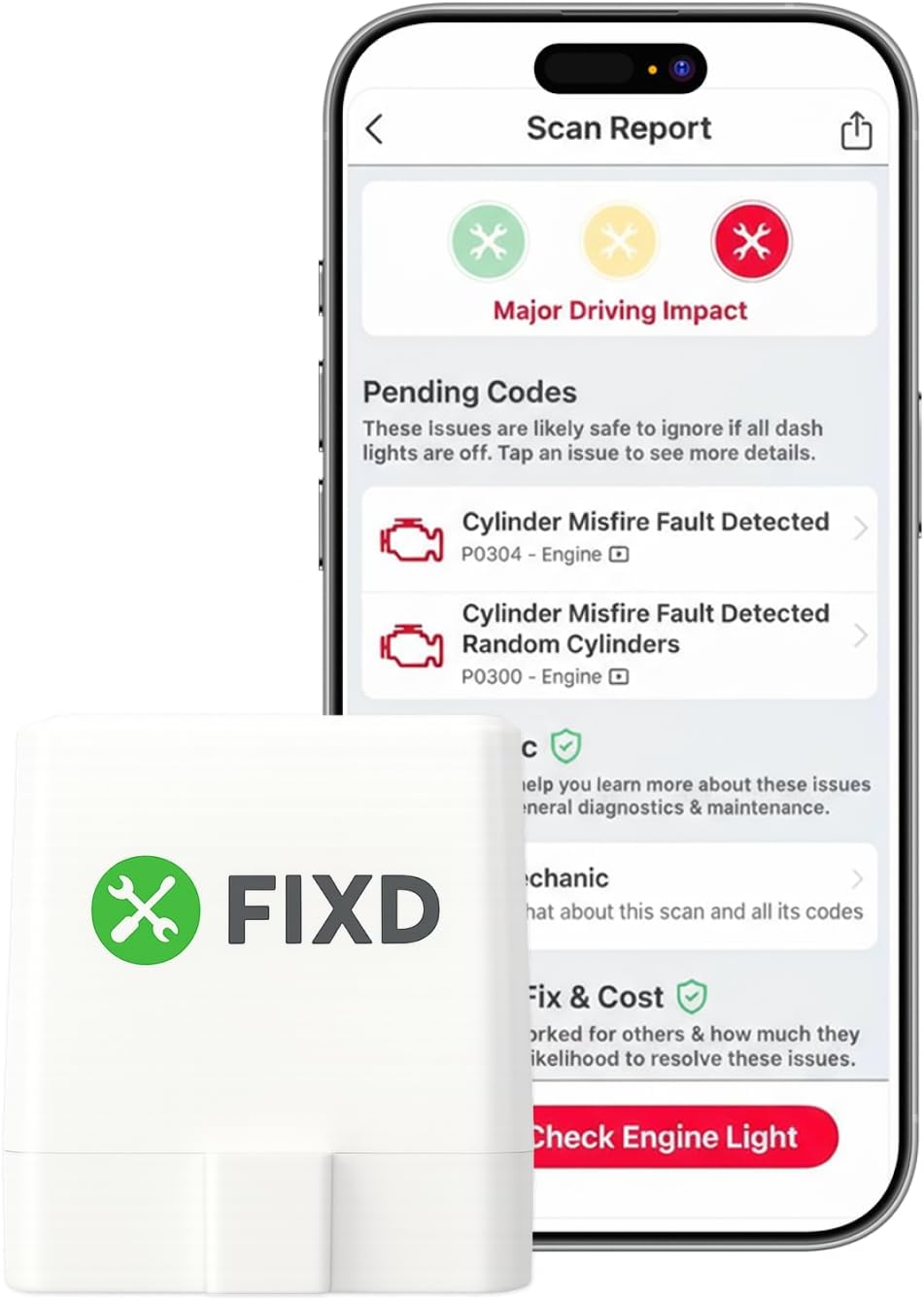
Best Bluetooth OBD2 Scanner
Detect 39,000+ Issues With Enhanced Codes. Save $1000s on car repairs & buying used vehicles by diagnosing problems yourself.
Shop on Amazon
Key Takeaways
- A solid check engine light on indicates a stored diagnostic trouble code (DTC) that requires investigation, but you can safely drive short distances to a repair shop unless the light is flashing, which signals severe misfires demanding immediate shutdown.
- Common causes of check engine light problems include loose gas caps, failing oxygen sensors, worn spark plugs, dirty mass airflow sensors, and catalytic converter efficiency issues—with a loose gas cap being the easiest fix.
- Use an OBD-II scanner to read diagnostic codes and freeze-frame data at the moment the fault occurred; most auto parts stores offer free scanning if you don’t own a reader.
- Check for obvious symptoms like overheating, power loss, or unusual noises before driving, and monitor engine temperature and fuel trim using live scan data to confirm whether the problem is active.
- Reset your check engine light only after fixing the underlying issue; clearing codes without repairs will cause the light to return once the PCM completes its next diagnostic self-test.
- Schedule a professional mechanic visit if codes indicate internal engine or transmission problems, the light returns immediately after clearing, or you experience drivability issues like rough idle or stalling.
What Does the Check Engine Light Mean?
Understanding Your Vehicle’s Warning System
Your vehicle’s powertrain control module (PCM) monitors dozens of sensors every millisecond. When a sensor reading falls outside the manufacturer’s threshold, whether it’s fuel trim, ignition timing, exhaust gas composition, or evaporative pressure, the PCM logs a five-character diagnostic trouble code and illuminates the check engine light.
The light itself is amber or yellow, never red. Red dashboard warnings (like oil pressure or brake system) demand immediate shutdown. A solid check engine light on means the PCM wants you to investigate soon, but the vehicle remains drivable for short trips.
Modern OBD-II systems (mandated since 1996) standardize DTCs across all makes. That means a P0420 code on a Honda means the same thing on a Ford: catalytic converter efficiency below threshold. The PCM also captures freeze-frame data, a snapshot of engine RPM, coolant temperature, vehicle speed, and fuel trim at the moment the fault occurred. This data helps technicians reproduce the failure.
Understand the difference between check engine light vs maintenance required light. The maintenance light (often labeled “MAINT REQD”) is a simple service reminder based on mileage, not a diagnostic alert. Only the amber check engine symbol indicates a stored trouble code.
Common Reasons Why Your Check Engine Light Turns On
Loose or Faulty Gas Cap
A loose gas cap check engine light fix is the easiest win. The evaporative emission control (EVAP) system maintains a sealed fuel vapor circuit. When you don’t tighten the cap fully, ambient air leaks in and the PCM detects abnormal EVAP pressure. Code P0440, P0455, or P0457 will store in memory.
Remove your gas cap, inspect the rubber seal for cracks or debris, and reinstall it until you hear three clicks. Drive through two or three complete drive cycles (cold start to full operating temperature, then shutdown). If the cap was the only issue, the light will extinguish after the PCM completes its EVAP self-test.
Oxygen Sensor Failure
Oxygen sensor O2 failure symptoms include reduced fuel economy, rough idle, and hesitation under load. Your engine uses upstream O2 sensors (before the catalytic converter) to adjust the air-fuel mixture in real time. Downstream sensors monitor converter efficiency.
O2 sensors degrade from heat cycles and contaminants. Codes P0130 through P0167 indicate sensor circuit faults or slow response. When an O2 sensor fails, the PCM switches to open-loop mode, using pre-programmed fuel maps instead of live feedback, and fuel consumption climbs 10–20%.
Catalytic Converter Issues
Catalytic converter failure code P0420 (Bank 1) or P0430 (Bank 2) appears when the downstream O2 sensor reports insufficient NOx reduction. The converter’s honeycomb substrate can melt from prolonged misfires or clog from oil consumption.
A failing catalyst often causes a sulfur smell, reduced power, and poor acceleration. Replacement is expensive, so verify upstream O2 sensors are healthy first. A bad upstream sensor can mimic converter failure.
Mass Airflow Sensor Problems
Mass air flow MAF sensor dirty clean issues trigger codes P0100 through P0104. The MAF measures intake air mass using a heated wire or film element. Oil residue from over-oiled aftermarket air filters coats the sensor, skewing readings.
Symptoms include rough idle, stalling after cold start, and black exhaust smoke. You can clean a MAF sensor with dedicated MAF cleaner spray (never brake cleaner, it leaves residue). Remove the sensor, spray the element from 6 inches away, let it dry, and reinstall.
Spark Plugs and Ignition Coil Malfunctions
Worn spark plugs or failing ignition coils cause misfires. Codes P0300 (random misfire) or P0301–P0312 (cylinder-specific) appear. Misfires dump unburned fuel into the exhaust, contaminating the O2 sensor and catalyst.
If the check engine light flashes, the misfire is severe, pull over immediately to prevent catalyst damage. A steady light with misfire codes means the problem is intermittent or low-severity. Replace spark plugs every 30,000–100,000 miles (depending on plug type) and ignition coils as they fail.
How to Diagnose the Problem: Reading Trouble Codes
You need an OBD-II scanner to read diagnostic trouble codes DTC. Basic code readers cost $20–$50 and display the code and a generic description. Professional scan tools provide live data, freeze frames, and bi-directional control.
Plug the scanner into the 16-pin OBD-II port (usually under the driver-side dash near the steering column). Turn the ignition to ON (engine off). The scanner will communicate with the PCM and retrieve stored codes. Write down all codes, even “pending” ones, before clearing memory.
Freeze-frame data shows the exact conditions when the fault occurred: engine RPM, coolant temp, vehicle speed, calculated load, and short-term fuel trim. This snapshot helps you reproduce the problem. For example, if a P0171 (system too lean) was logged at idle with 0 mph and 15% positive fuel trim, you know the lean condition happens at idle, not highway cruise.
For a reliable, affordable OBD-II scanner, consider the ANCEL AD310 Classic Enhanced Universal OBD II Scanner. It reads and clears codes, displays freeze frames, and works on all 1996+ vehicles.
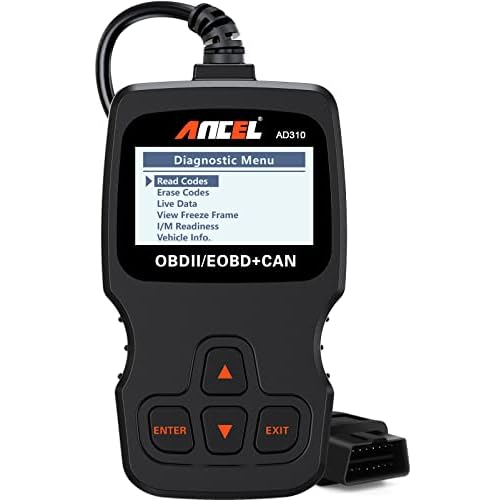
“Bought this after my CEL came on. Pulled a P0440 EVAP code, tightened the gas cap, cleared it, and the light stayed off. Saved me a $120 diagnostic fee.” via r/MechanicAdvice
Cross-reference codes using OBD-Codes.com or the manufacturer’s service manual. Some codes are generic (P0xxx), others are manufacturer-specific (P1xxx, P2xxx, P3xxx).
Is It Safe to Drive With the Check Engine Light On?
Safe to drive with check engine light on depends on the code and symptoms. A solid amber light usually means you can drive short distances to a repair shop. A flashing light means severe misfires, pull over and shut down immediately.
Check for obvious symptoms: overheating, loss of power, strange noises, smoke, or fluid leaks. If the vehicle drives normally and the light is steady, you can continue to your destination. Avoid hard acceleration, towing, or long highway trips until you diagnose the issue.
Certain codes are low-risk: P0440 (EVAP leak), P0171 (system too lean), or P0420 (catalyst efficiency). Others demand immediate attention: P0300 (random misfire), P0562 (low system voltage), or P0218 (transmission overtemp).
Monitor your engine temperature gauge and listen for unusual sounds. If the coolant temp needle climbs into the red zone or you hear knocking, pull over and call for a tow. Driving with severe overheating or detonation will destroy the engine.
Use an engine diagnostic scan tool live data to monitor real-time parameters while driving. Watch coolant temp, fuel trim, MAF airflow, and O2 sensor voltage. Abnormal readings confirm the problem is active, not just a stored memory code.
Steps to Take When Your Check Engine Light Comes On
First, check your gas cap. Remove it, inspect the seal, and reinstall it tightly. This fixes the problem about 10% of the time. Drive for two days to allow the EVAP system to self-test.
Second, scan for codes. Use an OBD-II reader to retrieve DTCs and freeze-frame data. Write down all codes before clearing. If you don’t own a scanner, most auto parts stores (AutoZone, O’Reilly, Advance Auto) will scan codes for free.
Third, inspect obvious failure points. Check the air filter for dirt or debris. Inspect vacuum hoses for cracks or disconnections. Look for fluid leaks under the vehicle. Remove and inspect spark plugs if you suspect misfires.
Fourth, research the codes. Use OBD-Codes.com or Mitchell1 DIY to understand what each code means and the likely causes. Some codes have simple fixes (replace air filter, clean MAF sensor), others require professional diagnosis (catalyst replacement, transmission issues).
Fifth, clear the codes and test-drive. If the light returns immediately, the fault is active. If it stays off, the problem may have been intermittent (like a loose connection) or already resolved (gas cap tightened).
For a comprehensive diagnostic experience, consider upgrading to the BlueDriver Bluetooth Pro OBDII Scan Tool. It pairs with your smartphone, provides detailed repair reports, and logs live data while you drive.
How to Reset Your Check Engine Light
To reset check engine light OBD scanner method: connect your scanner, turn the ignition to ON, and select “Clear Codes” or “Erase DTCs.” The PCM will delete all stored codes, pending codes, and freeze-frame data. The check engine light will extinguish immediately.
Warning: clearing codes without fixing the underlying problem means the light will return once the PCM completes its next diagnostic self-test. Some systems run tests immediately (O2 sensor heater), others require specific drive cycles (EVAP leak test requires overnight cool-down and fuel level between 1/4 and 3/4 tank).
Battery disconnect method: remove the negative battery cable for 15 minutes. This clears the PCM’s memory but also erases radio presets, seat positions, and learned fuel trims. The engine may idle rough for a few drive cycles while the PCM relearns its adaptive strategy.
Drive cycle completion ensures the PCM has run all required monitors. Most states require all monitors to show “Ready” status before passing an emissions test. After clearing codes, drive the vehicle through a complete cycle: cold start, idle for two minutes, accelerate to 55 mph, cruise for five minutes, decelerate to a stop, idle for 30 seconds, then shut down. Repeat for two or three cycles.
When to See a Mechanic for Check Engine Light Issues
Visit a mechanic when codes indicate internal engine or transmission problems: P0301–P0312 (misfires), P0420/P0430 (catalyst efficiency), P0700 (transmission control system), or any P2xxx powertrain codes.
Also see a professional if the light returns immediately after clearing, the vehicle exhibits drivability issues (rough idle, stalling, loss of power), or you lack the tools or experience to inspect components safely.
A professional diagnostic scan costs $100–$150 but provides deep-level data. Technicians use factory scan tools that access manufacturer-specific codes, live data PIDs, and bi-directional tests (like commanding the EVAP purge valve open to test circuit integrity).
Ask for a printed diagnostic report showing all codes, freeze frames, and live data screenshots. This documentation helps you verify the diagnosis and prevents unnecessary repairs. Some shops will charge a diagnostic fee, then waive it if you approve the repair.
“Had a P0420 on my Civic. My scanner said catalyst. Shop tested upstream O2 sensors, found one slow to respond, replaced it. $180 vs $1,200 for a cat.” via r/Honda
Reputable shops follow a diagnostic decision tree, testing the cheapest, most common causes first. Always get a second opinion if a shop quotes catalyst or engine replacement without verifying upstream sensor health or performing a compression test.
Frequently Asked Questions
What does the check engine light mean on my dashboard?
The check engine light indicates your vehicle’s powertrain control module (PCM) detected a problem and stored a diagnostic trouble code. It’s an amber/yellow warning—not an emergency. A solid light means you can drive short distances safely, while a flashing light signals severe misfires requiring immediate shutdown.
Is it safe to drive with the check engine light on?
A solid check engine light typically allows safe short-distance driving to a repair shop. Monitor for overheating, loss of power, or strange noises. A flashing light means severe misfires—pull over immediately. Avoid hard acceleration and towing until you diagnose the issue.
What are the most common reasons for a check engine light?
Common triggers include a loose gas cap, failing oxygen sensors, worn spark plugs, dirty mass airflow sensors, and catalytic converter efficiency loss. A loose gas cap alone causes about 10% of check engine lights and is easily fixable by tightening or replacing it.
How do I read my check engine light codes?
Use an OBD-II scanner ($20–$50) plugged into the 16-pin port under your driver-side dash. Turn ignition on and retrieve diagnostic trouble codes (DTCs). Most auto parts stores offer free scanning. Write down all codes, including freeze-frame data showing engine conditions when the fault occurred.
Can I clear the check engine light myself?
Yes, using an OBD-II scanner to select ‘Clear Codes’ or ‘Erase DTCs,’ or by disconnecting your negative battery cable for 15 minutes. However, clearing codes without fixing the underlying problem means the light will return once the PCM completes its next diagnostic self-test.
When should I see a mechanic about a check engine light?
Visit a professional if codes indicate misfires (P0301–P0312), catalyst issues (P0420/P0430), transmission problems (P0700), or any powertrain codes. Also seek help if the light returns immediately after clearing, the vehicle exhibits drivability issues, or you lack diagnostic tools and experience.
Read More:
- Nissan Check Engine Light (Means, Master Diagnostic Guide)
- Toyota Check Engine Light (What Is Actually the Car Telling You)
- Lexus Check Engine Light (Complete Diagnostic Guide for Owners)
- Kia Seltos Check Engine Light (Means and Troubleshooting Guide)
- Honda Check Engine Light (Means, Causes and How to Decode)