
You glance at your Honda Accord’s dashboard, and there it is, a glowing amber engine symbol staring back at you. Your mind races. Is this a minor glitch? Can you keep driving to work? Will the repair cost thousands?
The Honda Accord check engine light can signal anything from a loose gas cap triggering an EVAP leak code (P0455 or P1457) to serious engine misfires, oxygen sensor failures, or catalytic converter efficiency problems. A steady yellow light usually means you have time to diagnose the fault safely, while a flashing light indicates severe engine misfire that requires you to stop driving immediately to prevent permanent damage to the catalytic converter or internal engine components.
With generations spanning classic I4 engines, modern 1.5L and 2.0L turbocharged powertrains, robust V6 models, and hybrid variants, the Accord has earned its reputation for longevity, but it’s not immune to sensor glitches, emission-system hiccups, or ignition issues. This guide walks you through immediate checks, diagnostic code retrieval, common trouble patterns, and reset procedures.
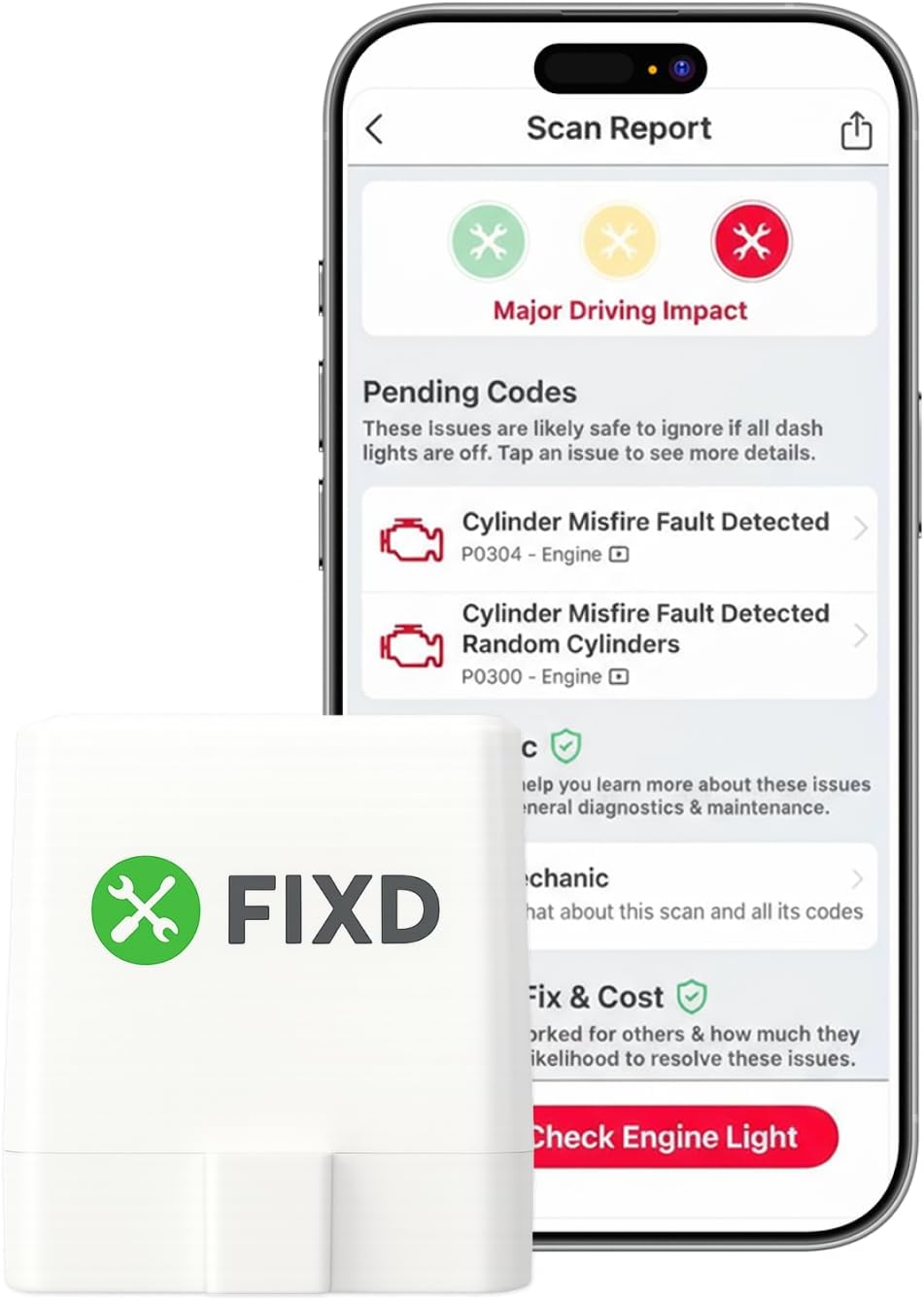
Best Bluetooth OBD2 Scanner
Detect 39,000+ Issues With Enhanced Codes. Save $1000s on car repairs & buying used vehicles by diagnosing problems yourself.
Shop on Amazon
Key Takeaways
- A steady Honda Accord check engine light gives you time to diagnose safely, but a flashing light signals severe misfire requiring immediate action to avoid $800–$2,500 catalytic converter damage.
- Always check your gas cap first—a loose or damaged cap is the most common cause of Honda Accord check engine light codes like P0455, and a replacement costs around $15.
- Use an OBD-II scanner to retrieve diagnostic trouble codes before replacing parts; the same code can have multiple root causes, from faulty oxygen sensors to exhaust leaks or vacuum problems.
- Misfire codes on 4-cylinder and V6 Accords often stem from worn spark plugs beyond 60,000–100,000 miles or failing ignition coils, both fixable without major engine work.
- Clear trouble codes only after completing repairs and verifying the fix with a full OBD-II drive cycle (cold start, city and highway driving) to ensure the check engine light stays off.
- Preventive maintenance—regular oil changes with Honda-recommended 0W-20 synthetic, timely spark plug replacement, and annual hose inspections—reduces repeat check engine warnings and keeps your Accord lasting 200,000+ miles.
What To Do When the Light Comes On
Tell a Steady Light From a Flashing Warning
A steady yellow check engine light means the onboard diagnostics (OBD-II) system logged a fault code, your Accord detected an emissions or sensor issue but it’s not an immediate emergency. You can drive carefully to a safe location, but you’ll want to diagnose the problem soon.
A flashing check engine light is urgent. It signals an active engine misfire severe enough to send unburned fuel into the exhaust, which can overheat and permanently destroy your catalytic converter, a repair that runs $800–$2,500 depending on your model year.
If the light blinks, reduce speed immediately, avoid hard acceleration, and pull over as soon as it’s safe. Continuing to drive with a flashing CEL can escalate a $150 spark-plug fix into a multi-thousand-dollar catastrophe. On many Accord trim levels, you’ll also notice reduced power or a rough idle when misfires occur.
Check the Gas Cap Before Driving Further
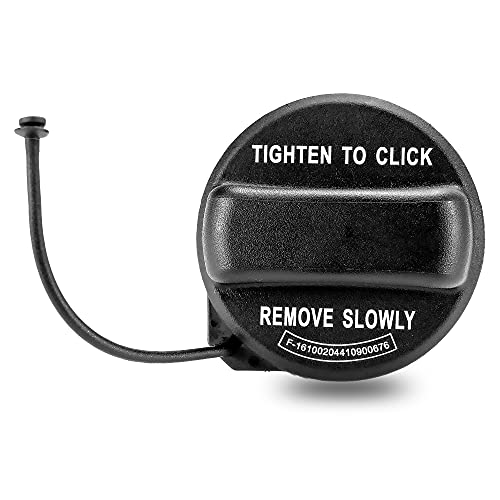
The simplest fix is often the right one. A loose, cross-threaded, or damaged gas cap breaks the seal on your fuel system, allowing fuel vapors to escape. The Accord’s EVAP (Evaporative Emission Control) system detects this leak and illuminates the check engine light, logging codes like P0455 (large EVAP leak) or Honda-specific P1457 (EVAP canister leak).
Remove your gas cap, inspect the rubber O-ring for cracks or debris, and reinstall it until you hear at least three clicks. If the cap looks worn, replace it, a quality OEM-style gas cap costs around $15 and can clear the code in a few drive cycles. This fix has saved countless Accord owners an unnecessary dealer visit.
Know When To Stop Driving and Call for Help
Beyond a flashing light, watch for secondary warnings. If your VSA (Vehicle Stability Assist) light, emissions-system indicator, or ECON mode indicator also appears, the fault may involve multiple systems, turbocharger pressure control on 1.5T models, VTEC oil-pressure solenoids (P1259, P2646), or hybrid battery-management modules.
Pull over if you notice overheating, unusual engine noise, complete loss of power, or strong fuel or burning smells. These symptoms can indicate catastrophic failures, seized turbocharger bearings on turbocharged Accords, broken timing chains, or internal bearing damage. In those cases, continuing to drive risks engine replacement rather than a simple sensor swap.
Read the Code Before Replacing Parts
Use an OBD2 Scanner To Retrieve Codes
Guessing the problem is expensive. Invest in a basic OBD-II Bluetooth scanner ($20–$50) or visit an auto-parts store for a free code scan. Plug the scanner into the OBD-II port under your Accord’s dashboard (driver’s side, near the steering column), turn the ignition to ON without starting the engine, and read the stored Diagnostic Trouble Codes (DTCs). Most scanners pair with smartphone apps that display live sensor data, freeze-frame snapshots, and code definitions.
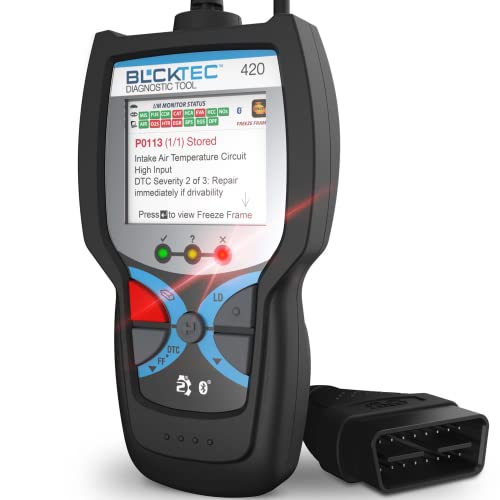
For deeper Honda-specific diagnostics, VTEC system faults, immobilizer codes, or hybrid-battery cell data, consider a mid-range scanner or the BlueDriver Bluetooth Pro, which offers manufacturer-specific code libraries and repair reports. Car Care Kiosk’s OBD-II guide explains port locations and scanner basics.
Understand What Diagnostic Trouble Codes Can and Cannot Tell You
A DTC tells you which sensor circuit or system triggered the fault, it doesn’t diagnose the root cause. Code P0420 (Catalyst System Efficiency Below Threshold) might mean a failing catalytic converter, but it can also result from a faulty downstream oxygen sensor, exhaust leak, or even using the wrong oil weight that fouls the upstream O2 sensor.
P0300 (Random/Multiple Cylinder Misfire) could stem from bad spark plugs, a vacuum leak, low compression, or, on turbocharged Accords, a stuck wastegate.
Cross-reference codes with known Accord issues. For example, 2013–2017 V6 models frequently log P0300-series misfire codes due to factory spark plugs reaching end-of-life around 60,000–80,000 miles. The 1.5T engine in 2018–2022 Accords sometimes triggers P0172 (System Too Rich) from carbon buildup on intake valves, direct-injection engines don’t self-clean the way port-injection designs do.
Clear Codes Only After the Repair Is Complete
Don’t erase codes before fixing the problem. The stored freeze-frame data, engine RPM, coolant temperature, and load at the moment the fault occurred, helps pinpoint intermittent issues. After you complete the repair, clear the codes using your scanner or disconnect the negative battery terminal for 15 minutes to reset the ECU (Engine Control Unit).
The check engine light will turn off if the fault is resolved, but the OBD-II system needs to complete a full drive cycle, city and highway driving with cold starts, to confirm all monitors are “ready.” You can verify readiness status in your scanner’s I/M Readiness menu before smog testing or inspection.
Common Causes and Related Trouble Codes
EVAP Leaks, Fuel Vapors, and Gas-Cap Codes
EVAP system faults are the most common Accord check engine light trigger. Besides a loose gas cap, you might face a failing purge control solenoid valve (P1457, P0497), cracked EVAP hoses, or a saturated charcoal canister. The purge valve opens to let stored fuel vapors flow into the intake manifold: when it sticks open or leaks, you’ll smell raw fuel and see poor idle quality.
Inspect rubber hoses running from the fuel tank to the engine bay, heat and age cause cracks. EVAP system diagrams from Honda Tech forums show common failure points. Replacing a purge valve is straightforward: locate it near the intake manifold, unplug the electrical connector, twist off the hoses, and install the new valve. Costs run $40–$80 for the part.
Misfires From Spark Plugs or Ignition Coils
Misfire codes (P0300, P0301–P0306) point to combustion failure in one or more cylinders. On four-cylinder Accords, especially the 2.4L K24 and 1.5T engines, fouled or worn spark plugs are the usual suspect. Factory plugs last 60,000–100,000 miles: if you’re beyond that interval, replace all four (or six on V6 models) as a set with NGK or Denso iridium plugs.

Ignition coils fail less often but create identical symptoms. Swap the coil from the misfiring cylinder with one from a cylinder that runs clean: if the misfire code moves to the new cylinder, the coil is bad. V6 Accords (3.5L J35) use individual coil-on-plug assemblies that can crack internally, causing misfires under load.
On turbo models, low engine oil or using incorrect viscosity (0W-20 is specified) can starve VTEC solenoids and turbocharger oil-feed lines, triggering P1259 or P2646 along with misfires. Always check your dipstick before chasing ignition parts.
Oxygen, Airflow, and Fuel-Mixture Sensor Faults
Oxygen sensors monitor exhaust gases before and after the catalytic converter. Code P0134 (O2 Sensor Circuit No Activity, Bank 1 Sensor 1) means the upstream sensor isn’t reading properly, common after 80,000–120,000 miles. A failing upstream O2 sensor throws off the air-fuel mixture, reducing fuel economy and increasing emissions.
Downstream sensors (P0140, P0141) track converter efficiency. If they fail, you’ll see P0420 or P0430. Before replacing the converter, swap the downstream sensor, it’s cheaper and often the real culprit. Honda Accord forums on Reddit frequently discuss sensor-versus-cat diagnosis.
Dirty mass airflow (MAF) sensors cause P0101 (MAF Circuit Range/Performance) and rough idle. Remove the sensor from the intake tube, spray it with MAF cleaner (never touch the delicate wire element), let it dry, and reinstall. This $12 fix can restore smooth running and proper fuel trim.
Catalytic Converter and Exhaust-System Problems
Code P0420 (Catalyst Efficiency Below Threshold) appears when the converter can no longer reduce emissions effectively. True converter failure usually happens after 150,000+ miles or if you ignored a flashing check engine light that dumped unburned fuel into the exhaust.
Before spending $1,000+ on a new cat, verify the downstream O2 sensor isn’t lazy or contaminated. Run a fuel-system cleaner with PEA additives through a full tank, sometimes carbon buildup on sensor tips mimics converter failure. If sensor voltage switching is slow or flat, replace the sensor first.
Exhaust leaks before the upstream O2 sensor can also trigger P0420 by letting outside air skew readings. Inspect manifold gaskets and flex pipes for cracks or rust-through holes.
Repair Decisions, Resets, and Prevention
Match the Repair to the Confirmed Fault
Don’t replace parts based on a code alone. If P0171 (System Too Lean) appears, the root cause might be a vacuum leak, failed fuel pump, dirty MAF sensor, or even a cracked intake boot. Use your scanner’s live data to watch fuel trims, MAF sensor grams-per-second, and O2 sensor voltage while the engine runs. Compare those values to factory specifications in a Helm or Haynes service manual.
For intermittent faults, VTEC codes that come and go, or misfires only when cold, test-drive the Accord while monitoring live data. Freeze-frame snapshots capture conditions at the moment the code set, revealing patterns like “misfire only at 3,000 RPM under load” (ignition coil breaking down) or “EVAP code after refueling” (purge valve sticking).
Reset the Warning Light the Right Way
Once the repair is done, clear codes through your OBD-II scanner or disconnect the battery. To disconnect, remove the negative (black) terminal clamp, wait 15 minutes to discharge the ECU capacitors, then reconnect. Your radio presets and clock will reset, but the check engine light will stay off if the fault is truly fixed.
Drive the car through a complete OBD-II drive cycle: cold start, idle for two minutes, gentle acceleration to 40–60 mph, steady cruise, deceleration, and a stop. This allows all emission monitors to run and verify system health. If the light returns immediately, you either didn’t fix the right problem or there’s a second fault.
Maintain Your Accord To Reduce Repeat Warnings
Preventive maintenance is cheaper than diagnosis. Replace spark plugs, air filters, and cabin filters on schedule. Use Honda-recommended 0W-20 synthetic oil and change it every 5,000–7,500 miles, turbocharged engines are especially sensitive to oil quality. Inspect engine-bay hoses and vacuum lines annually: rubber degrades in heat.
Keep your gas tank above a quarter full to prevent sediment from clogging the fuel filter and pump. Use Top Tier gasoline with detergent additives to minimize carbon deposits on intake valves and injectors. For Hybrid models, follow the Honda Hybrid maintenance guide to keep the high-voltage battery and regenerative braking system in peak condition.
By staying proactive, you’ll catch small issues, worn plugs, loose connectors, minor vacuum leaks, before they turn into check engine lights and expensive repairs. Your Accord is built to last 200,000+ miles: regular attention ensures it does.
Frequently Asked Questions
What does a flashing Honda Accord check engine light mean?
A flashing check engine light indicates severe engine misfire sending unburned fuel into the exhaust. Stop driving immediately to prevent catalytic converter damage ($800–$2,500 repair). A steady light means you can drive safely to diagnose the issue.
Why is my Honda Accord check engine light on after refueling?
A loose or damaged gas cap often triggers EVAP leak codes (P0455, P1457). Remove the cap, inspect the O-ring for damage, and reinstall until you hear three clicks. A $15 replacement cap usually clears the code within a few drive cycles.
Can I drive my Honda Accord with the check engine light on?
A steady yellow light allows careful driving to a safe location for diagnosis. However, a flashing light indicates active misfire and requires immediate stopping to avoid catalytic converter damage. Always address the fault soon after.
What diagnostic codes commonly appear on Honda Accords?
Common codes include P0300 (misfire), P0420 (catalytic converter efficiency), P0455 (EVAP leak), and P0171 (system too lean). Use an OBD-II scanner ($20–$50) to retrieve the code, but remember codes indicate symptoms, not always root causes.
How do I reset the check engine light on my Honda Accord?
Clear codes using an OBD-II scanner after repairs are complete, or disconnect the negative battery terminal for 15 minutes. Drive through a complete cycle (cold start, city and highway driving) to allow monitors to verify the fix.
What’s the difference between oxygen sensor and catalytic converter failure?
Both trigger P0420 code, but oxygen sensor replacement costs $150–$300 versus $1,000+ for a converter. Test the downstream O2 sensor first with a fuel-system cleaner. If sensor voltage is slow or flat, replace the sensor before considering converter replacement.
Read More:
- Honda Check Engine Light (Means, Causes and How to Decode)
- Honda CR-V Check Engine Light (What It Means and How to Fix It Fast)
- Honda Civic Check Engine Light (Here’s the Ultimate Diagnostic Guide)
- Jeep Check Engine Light (Here’s the Quick Diagnostic Guide)
- Ford Check Engine Light (Means and Step-By-Step Diagnosis)
- How to Fix EPC Light on VW (Common Causes and Solutions)